
If you’re planning a trip to Europe—whether it’s a week in Paris, a road trip through the Italian countryside, or a multi‑country train journey—staying connected is essential. You’ll want reliable data for maps, train schedules, and staying in touch with family and friends. The best solution is usually a local SIM card or an eSIM that works across the EU. But with so many options—physical SIMs, eSIMs, prepaid plans, and roaming—how do you choose the best one? This guide breaks down everything you need to know to pick the right SIM card for your European adventure.
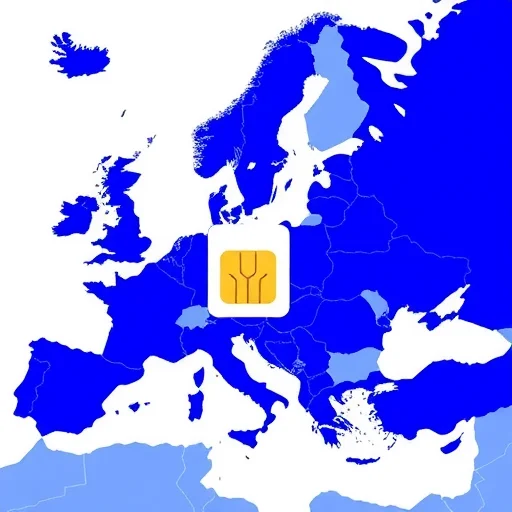
First, let’s understand the landscape. One of the biggest advantages of traveling in the European Union is the “roam like at home” policy. This means that if you buy a SIM card from any EU country, you can use it across all EU member states without paying extra roaming fees. Your data, calls, and texts are treated as if you were in the country where you bought the SIM. This is a game‑changer for multi‑country travel. However, Switzerland, the UK, and some other non‑EU countries may not be included in all plans, so check carefully.
You have two main options: physical SIM cards and eSIMs. Physical SIMs are the traditional removable cards; eSIMs are digital profiles you download to your phone. Both are widely available, and the choice often depends on your phone’s compatibility and your preference for convenience.
**Option 1: Physical SIM cards from European carriers.** If you prefer a physical SIM, you can buy one upon arrival at the airport, at a carrier shop, or at convenience stores. Some of the most popular prepaid SIMs for Europe include:
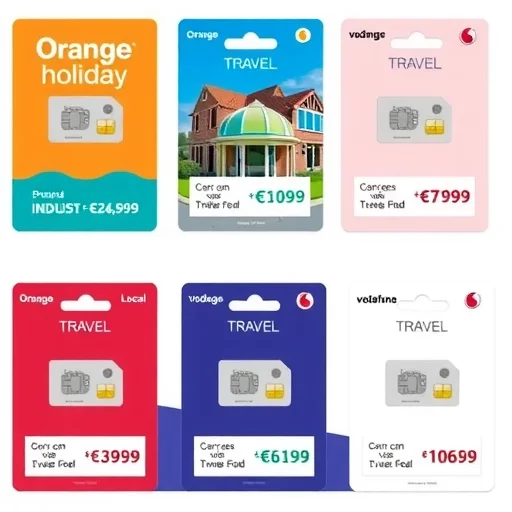
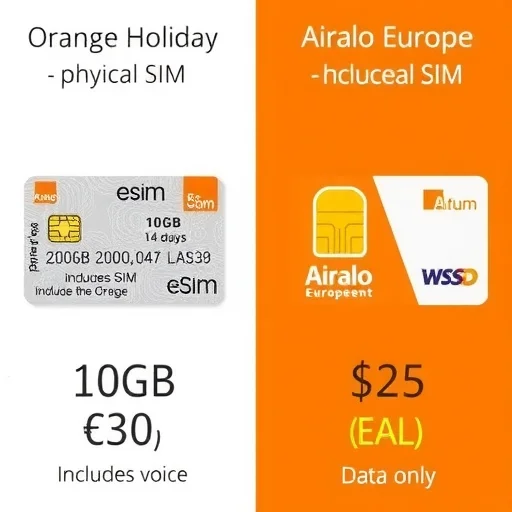
**Orange Holiday (France)**: A popular choice for travelers. The Orange Holiday SIM comes with 20GB of data, unlimited calls and texts within Europe, and a European phone number. It works across the EU and includes Switzerland, the UK, and some other non‑EU countries. It’s available at Orange shops, airports, and online. Cost: around €30–€40 for 14 days.
**Vodafone (various countries)**: Vodafone offers prepaid SIMs in many European countries. Their “Vodafone Travel” or “Vodafone Holiday” SIMs often include generous data allowances and EU roaming. Prices vary by country, but a typical plan might be 10–20GB for €20–€30.
**Three UK (UK)**: If you’re starting in the UK, Three offers a “Go Roam” SIM that works in many European destinations. However, since the UK is no longer in the EU, check the roaming terms—some plans may have limits or daily fees.
**Local carriers**: In each country, local carriers like Deutsche Telekom (Germany), TIM (Italy), and Movistar (Spain) offer prepaid SIMs with EU roaming. These can be excellent if you’re spending most of your time in one country.
**Option 2: eSIMs for Europe.** If your phone supports eSIM, you have even more flexibility. You can buy a Europe‑wide eSIM before you leave home, install it, and activate it upon arrival. No need to find a store or swap physical cards. Popular eSIM providers for Europe include:
**Airalo**: Offers “Eurolink” plans covering 39 European countries. Data allowances range from 1GB to 20GB, valid for 7 to 30 days. Prices start around $5 for 1GB. Airalo’s plans are data‑only, so no phone number for calls/texts.
**Nomad**: Similar to Airalo, with Europe‑wide plans, both fixed‑total and daily‑cap options. Also data‑only.
**Holafly**: Specializes in unlimited data plans. Their Europe eSIM includes unlimited data (with fair usage) and works across most of Europe. Prices start around $25 for 5 days, $45 for 10 days. Also data‑only.
**Ubigi**: Offers Europe plans with data allowances, often using top‑tier local networks. Data‑only.
If you need a local European phone number (for calls, texts, or verification codes), a physical SIM from a carrier like Orange or Vodafone is usually the better choice, as most eSIMs from global providers are data‑only.
Now, let’s talk about how to choose based on your travel style.
**Scenario 1: Multi‑country rail trip.** You’re visiting France, Germany, Italy, and Switzerland over 14 days. You need data for maps, train apps, and staying connected. You don’t need a local phone number. A Europe‑wide eSIM from Airalo or Holafly is perfect. You buy it before you leave, install it, and it works seamlessly across borders. A 10GB or unlimited plan should be sufficient.
**Scenario 2: Single‑country stay.** You’re spending 10 days in Spain. You want a local Spanish number for restaurant reservations and local apps. You buy a prepaid physical SIM from Orange Spain or Vodafone Spain at the airport. You get 20GB of data, unlimited national calls, and EU roaming if you take side trips. Cost: around €20–€30.
**Scenario 3: Long‑term travel (1 month+).** You’re studying or working remotely in Europe for a month. You need a local number, reliable data, and possibly voice. A local carrier prepaid plan (e.g., Orange Holiday, which can be topped up) or a local monthly plan (if you have a local address) is best. Many carriers offer 30‑day prepaid plans with 20–50GB for €20–€40.
Now, let’s address some practical considerations.
**Device compatibility:** Ensure your phone is unlocked. If your phone is locked to a specific carrier, you won’t be able to use a SIM from another carrier. Most modern phones support eSIM (iPhones from XS/XR onward, many Android phones). Check before you go.
**Registration:** In many European countries, you need to register your SIM with your passport. This is required by law to prevent fraud. When buying a physical SIM, you’ll need to show your passport. For eSIMs from global providers, registration is usually done online during purchase.
**UK and Switzerland:** These are not in the EU, so roaming rules differ. Some EU SIMs include Switzerland and the UK at no extra cost; others may charge daily fees or not include them at all. Check before buying. If you’re visiting the UK separately, consider a UK‑specific SIM.
**Data usage:** For most travelers, 1GB per day is sufficient for maps, social media, and messaging. For video calls or streaming, you’ll need more. Unlimited plans are great for heavy users but can be more expensive.
In summary, the best SIM card for Europe depends on your itinerary, data needs, and whether you require a local number. For multi‑country trips, a Europe‑wide eSIM (Airalo, Nomad, Holafly) offers convenience and seamless coverage. For longer stays or when you need a local number, a physical SIM from a major carrier like Orange or Vodafone is a solid choice. And thanks to EU roaming rules, you can roam freely across most of Europe without extra charges. With a little planning, you’ll be connected from the moment you arrive. For European travel, the best SIM choice depends on your itinerary. For multi‑country trips, a Europe‑wide eSIM (Airalo, Nomad, Holafly) offers data‑only convenience with seamless EU roaming. For longer stays or when a local number is needed, a physical prepaid SIM from Orange, Vodafone, or a local carrier provides voice, texts, and generous data. EU roaming is included in most plans, but check coverage for Switzerland and the UK.
TravelConnectivityTipsFINISHED
For a month‑long remote work trip, I got a Vodafone prepaid SIM in Italy. 50GB for €30, plus a local number. Worked great for video calls and tethering. Local number was essential for delivery apps and calling local contacts.
Important tip: If you’re visiting Switzerland or the UK, check that your SIM includes them. My Orange SIM included Switzerland but not the UK. I had to buy a separate plan for London. Read the fine print!
I prefer physical SIMs because I like having a tangible backup. Bought a Three UK SIM for a trip that started in London and went to Europe. Worked well, but the roaming data cap was lower. Still, it was convenient to have one SIM for the whole trip.
Used the Orange Holiday SIM for a 2‑week trip across France, Italy, and Switzerland. 20GB was plenty, and having a local number was handy for restaurant reservations. EU roaming worked perfectly. Highly recommend.
I’m a frequent traveler to Europe and now use Airalo eSIM exclusively. No more hunting for SIM cards. Install before I leave, activate on arrival. 10GB for 30 days is perfect for my needs. Data‑only is fine since I use WhatsApp for calls.