
If you’re planning a trip to China—whether it’s exploring the Great Wall, navigating the bustling streets of Shanghai, or visiting the historic sites in Beijing—staying connected is essential, but it comes with unique challenges. China’s internet landscape is different from most other countries: many Western apps and services (Google, Facebook, Instagram, WhatsApp, etc.) are blocked, and the domestic mobile networks operate under specific regulations. The best solution for most travelers is an eSIM, but not all eSIMs work the same way in China. This guide breaks down everything you need to know about choosing an eSIM for China, including which providers can bypass the firewall and what to expect for coverage.
First, let’s address the most important factor: internet access. China has a national firewall that blocks many foreign websites and apps. If you use a local Chinese SIM card (from China Mobile, China Unicom, or China Telecom), you will be subject to these blocks. That means Google Maps won’t work, WhatsApp and Instagram will be inaccessible, and you’ll need to use local alternatives like Baidu Maps, WeChat, and Alipay. If you want to use the apps you’re accustomed to, you need an eSIM that routes your data through a foreign server—effectively giving you “roaming” access that bypasses the firewall. Most international eSIM providers (like Airalo, Nomad, Holafly, etc.) offer plans that do exactly this. They connect to a partner network outside China, so your traffic is not filtered by the Chinese firewall.
So, which type of eSIM should you choose? There are two main categories for China travel.
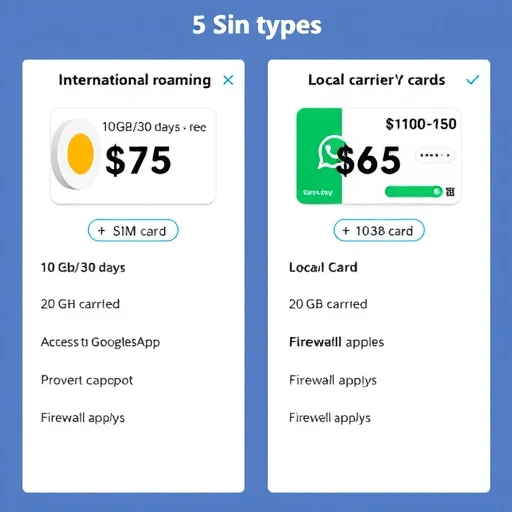
**International eSIMs (roaming‑based)** are the best choice if you want to use Western apps like Google Maps, WhatsApp, Instagram, and Facebook without a VPN. These eSIMs are offered by global providers such as Airalo, Nomad, Holafly, and others. They typically partner with carriers like Hong Kong-based CMHK or international roaming networks, and your data is routed outside mainland China. The result: you can access the open internet as you would in any other country. These plans are data‑only (no local Chinese phone number), and they usually offer fixed‑total data packages (3GB, 5GB, 10GB, etc.) valid for 7, 15, or 30 days. They’re ideal for short to medium trips and for travelers who rely on Western apps.
**Local Chinese carrier eSIMs** (from China Mobile, China Unicom, or China Telecom) give you a local Chinese phone number and often lower data rates, but they are subject to the firewall. You won’t be able to access Google, WhatsApp, Instagram, etc., unless you use a VPN. Some travelers prefer this option if they primarily use Chinese apps like WeChat, Baidu Maps, and Alipay, or if they need a local number for receiving SMS verification codes. Local eSIMs can be purchased at airport kiosks (in Beijing, Shanghai, Guangzhou) or online with passport registration.
So which should you choose? It depends entirely on your app usage and travel style.
If you want to use Google Maps, WhatsApp, Instagram, and Facebook without the hassle of setting up a VPN, an international roaming eSIM is your best bet. You can install it before departure, and it will work from the moment you land. For a one‑week trip, a 5GB or 10GB plan usually costs between $15 and $30. Providers like Airalo, Nomad, and Holafly all offer China‑specific or Asia‑region plans that include roaming access.
If you’re staying longer, need a local Chinese phone number for things like booking Didi (ride‑hailing) or receiving SMS verifications, or if you’re comfortable using local apps and have a VPN set up, a local carrier eSIM can be more cost‑effective. For example, China Mobile’s prepaid eSIM might offer 20GB for around ¥100–150 (about $14–$21). However, you’ll need to register with your passport, and the setup is often done at the airport or a carrier shop.
Now, let’s talk about a few specific international eSIM providers that work well in China.
**Airalo** offers a “China” eSIM that runs on a roaming network (typically using China Mobile or a Hong Kong carrier). It’s data‑only and provides unrestricted internet access. Plans range from 3GB/7 days to 10GB/30 days, with prices starting around $12. Airalo’s app is user‑friendly, and installation is straightforward.
**Nomad** offers both “China” and “Asia” plans that include China. These plans also bypass the firewall. Nomad’s daily‑cap plans (e.g., 1GB per day) are popular with travelers who want predictable daily usage. Prices are competitive with Airalo.
**Holafly** specializes in unlimited data plans. Their China eSIM offers unlimited data for a set number of days (5, 10, 15, etc.) and also provides unrestricted internet access. It’s more expensive than fixed‑total plans but ideal for heavy data users.
**Saily** (from the team behind NordVPN) also offers a China eSIM with straightforward pricing. Since NordVPN is a VPN company, their eSIM is designed with privacy and unrestricted access in mind.
I recently helped a friend plan a 10‑day trip to Beijing, Xi’an, and Shanghai. She wanted to use Google Maps for navigation (since she was familiar with it) and stay in touch with family via WhatsApp. We opted for an international roaming eSIM from Nomad—a 10GB plan for $25. She installed it before departure, and it worked flawlessly from the moment she landed. She had unrestricted access to all her usual apps, and she never needed to set up a VPN. She used about 8GB for maps, messaging, and social media. She told me later that having Google Maps working was a huge relief, especially in cities where she wasn’t familiar with the layout.
Another friend who travels to China frequently for business prefers a local China Mobile SIM. He needs a local number to receive SMS for work purposes, and he uses WeChat for almost everything. He’s comfortable with a VPN for the few times he needs Western apps. He buys a prepaid SIM at the airport upon arrival, registers with his passport, and pays about ¥100 for 20GB. For him, the local number and lower cost outweigh the convenience of a roaming eSIM.
One important note: even with an international roaming eSIM, some apps may behave differently in China. Google Maps, for example, may have less detailed data in China compared to Baidu Maps, but it will still function for basic navigation. Also, iMessage and FaceTime generally work without issues. WhatsApp and Instagram will work normally. If you’re using an international eSIM, you do not need an additional VPN—the roaming eSIM itself provides the bypass.
Another detail: if you plan to use a local Chinese SIM, you will need to install a VPN before you travel, as many VPN sites are blocked in China. It’s essential to set this up before you arrive. Popular VPNs like ExpressVPN, NordVPN, and others have instructions for China travel. Without a VPN, a local SIM will severely limit your access to Western services.
When comparing international eSIMs for China, look for providers that explicitly state their China plans provide unrestricted internet access (often called “global roaming” or “international data”). Avoid buying a “China” eSIM that is actually a local carrier resold through a global platform—those may still be subject to the firewall. Stick to well‑known travel eSIM brands with good reviews.
Ultimately, the best eSIM for China depends on whether you need access to Western apps without a VPN. For most tourists, an international roaming eSIM is the simplest and most reliable choice. It gives you the familiarity of Google Maps, WhatsApp, and Instagram, and it works from the moment you land. If you’re staying long‑term or need a local number, a local carrier eSIM combined with a VPN is a cost‑effective alternative. With the right choice, you can stay connected and focus on enjoying China’s incredible sights and culture. For China, the best eSIM for most travelers is an international roaming eSIM (from Airalo, Nomad, Holafly) that bypasses the firewall, allowing access to Google Maps, WhatsApp, and Instagram without a VPN. Local carrier eSIMs (China Mobile, Unicom) offer a local number and cheaper data but require a VPN for Western apps. Choose based on your app needs and trip length.
TravelChinaTechTipsFINISHED

Important tip: If you need a local number for Didi or local services, a local SIM is better. But for most tourists, the international eSIM is way easier. I used China Mobile with a VPN—it worked, but setting up the VPN was an extra step.
I used Airalo’s China eSIM for a week in Beijing and Shanghai. 5GB was plenty for maps, messaging, and social media. So convenient not to worry about VPNs. Great for short trips.
Used Nomad’s China eSIM for a 2‑week trip. Had unrestricted access to Google Maps, WhatsApp, and Instagram—no VPN needed. Installed before I left, worked perfectly. Highly recommend for anyone who wants the familiar apps.
I used Holafly’s unlimited plan for a 10‑day trip. Streamed video, used maps, never worried about data. The unrestricted internet access was seamless. Worth the price for heavy users.
Heads-up: Google Maps works but doesn’t have transit info in China. Download Baidu Maps offline as a backup. But overall, the roaming eSIM was a lifesaver for keeping in touch with family.