
If you’re planning to spend a month in the United States—whether for work, study, or an extended vacation—you’ve likely realized that relying on your home carrier’s international roaming is a financial non-starter. Daily roaming fees from most non-US carriers can easily exceed $10 per day, turning a month-long trip into a $300+ phone bill. Local prepaid SIMs from US carriers are an option, but they often require visiting a store, showing ID, and navigating confusing plan structures designed for long-term residents. The good news is that 30-day eSIM plans designed specifically for US visitors have become widely available, offering a convenient, affordable middle ground. In this guide, I’ll walk you through the US eSIM landscape, explain what to look for in a month-long plan, and help you match the right option to your specific travel style.
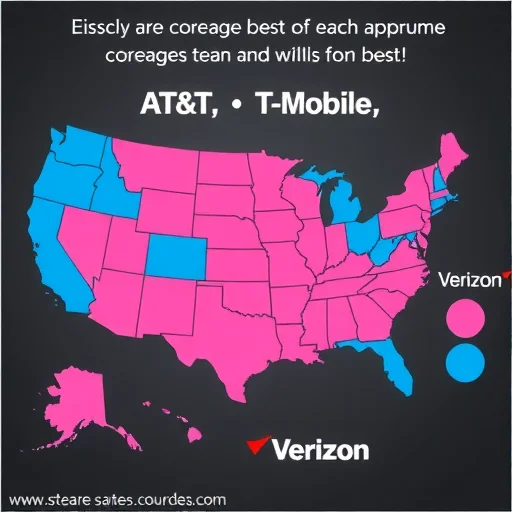
First, let’s understand the unique challenges of US mobile connectivity. The United States is massive, and network coverage varies dramatically depending on where you’re going. The three major carriers—AT&T, T-Mobile, and Verizon—each have strong coverage in different regions. Verizon traditionally leads in rural areas and the Midwest, T-Mobile excels in urban centers with fast 5G deployment, and AT&T offers a solid balance across the country. If you’re spending your entire month in New York City or Los Angeles, coverage from any major carrier will be excellent. But if you’re planning a road trip through national parks, or splitting time between cities and rural areas, the underlying network your eSIM uses becomes critically important.
The US eSIM market for visitors falls into two main categories. The first is global eSIM providers like Airalo, Holafly, Nomad, and Maya Mobile that offer US-specific plans. These providers lease access from US carriers at wholesale rates and resell it to travelers. The second category is direct eSIMs from US carriers themselves, which you can purchase online or in-store as a visitor. Both options have legitimate advantages, and the right choice depends entirely on your priorities: simplicity versus full carrier features, data-only versus having a real US phone number, and budget versus reliability.
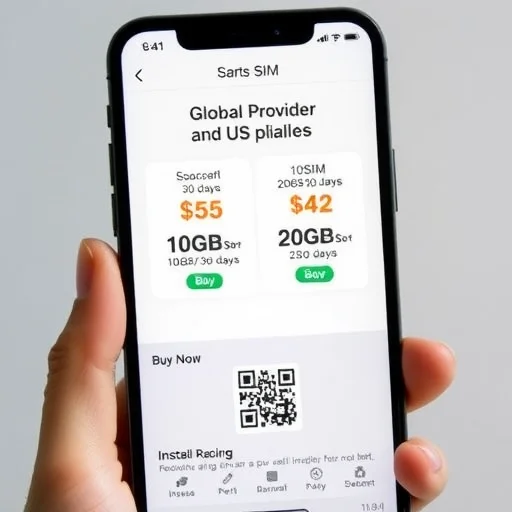
Let’s start with global eSIM providers, because they’re what most travelers encounter first. These providers offer app-based purchasing, instant installation via QR code, and plans specifically designed for 30-day stays. A typical offering might be 10GB for $25, 20GB for $42, or 50GB for $80, all valid for 30 days. The massive advantage here is convenience. You can buy and install the eSIM before you even leave your home country. The moment your plane lands in the US and you turn off airplane mode, you have data. No store visits, no ID checks, no waiting in line at an airport kiosk. For travelers who primarily need data for maps, ride-hailing apps, messaging, and social media, these plans are often the perfect fit.
However, there are trade-offs. Most global provider eSIMs are data-only. You won’t get a US phone number that can make traditional calls or receive SMS verification codes. This matters more than you might think. Many US services—ride-sharing apps like Uber, food delivery, and even some hotel Wi-Fi portals—prefer or require a US number for verification. If you need to call a local business, a US number is essential. Additionally, these eSIMs typically run on one carrier’s network—often T-Mobile, which has strong city coverage but can be weaker in remote rural areas. The provider usually doesn’t disclose which carrier they use upfront, so you may not know exactly what coverage you’re getting until after purchase.
Now let’s look at the alternative: purchasing an eSIM directly from a US carrier. T-Mobile offers a visitor plan called “T-Mobile Tourist Plan” that gives you unlimited talk, text, and data for 30 days, typically priced around $30 to $40. This includes a real US phone number, full-speed data (often with a 5G cap), and access to T-Mobile’s entire nationwide network. AT&T has similar prepaid eSIM options for visitors, and Verizon offers prepaid plans that can be activated with eSIM. The clear advantage is that you get a real US number, which is invaluable for reservations, local communication, and two-factor authentication. You also get full network priority—your data isn’t deprioritized behind the carrier’s own customers, which matters during peak usage times in crowded areas.
The catch with direct carrier eSIMs is activation complexity. While you can sometimes activate online, many require you to visit a physical store, present your passport, and go through a verification process that can take 20 to 30 minutes. For travelers arriving at a busy airport or unfamiliar city, this can be a hassle. Additionally, carrier plans often have more complex pricing—some require you to purchase a “starter kit” in addition to the plan, and taxes and fees are rarely included in the advertised price. What looks like a $30 plan might end up costing $45 after activation fees and local taxes.
So how do you choose? Let’s walk through a few scenarios. Elena is a travel blogger spending a month road-tripping through the western US: national parks in Utah, Arizona, and California, plus cities like Las Vegas and San Francisco. She needs reliable coverage in remote areas where Verizon is known to have the strongest network. She also needs a US number to book campsites and communicate with local guides. She chooses a Verizon prepaid eSIM, activated at a store in Las Vegas on her first day. The process takes about 20 minutes, but for the rest of her trip, she has excellent coverage even in places like Zion National Park and Death Valley, and her US number makes local communication seamless.

Now consider David, a business traveler spending a month between New York and Chicago for work. He’ll be in hotels with Wi-Fi, mostly uses data for email, Slack, and maps, and his company covers his expenses but wants him to avoid roaming fees. He doesn’t need a US phone number because all his work communication is through apps. He purchases a 20GB data-only eSIM from a global provider before he leaves London. He installs it on his phone in five minutes, and when he lands at JFK, he’s connected immediately. He saves the cost and time of visiting a carrier store, and his data needs are fully met for the month. Total cost: $42.
Then there’s Ana, a student spending a month in Boston for a summer program. She needs a US number to receive verification texts from her university’s portal and to coordinate with classmates. She also needs enough data for daily maps, social media, and video calls home. She chooses T-Mobile’s tourist plan, which gives her a US number and 30 days of unlimited data. She activates online before departure, and the eSIM installs via QR code without ever visiting a store. The upfront cost is slightly higher than a data-only plan, but the included US number saves her from workarounds like using Google Voice or relying on WhatsApp for everything.

There are also hybrid approaches. Some travelers purchase a data-only eSIM for their primary data needs, then supplement with a low-cost US number from a service like Tello or Ultra Mobile PayGo that offers minimal minutes and texts on eSIM. This gives you the best of both worlds: cheap, flexible data from a global provider, plus a real US number for essential verification and calls. The trade-off is managing two eSIM profiles on your phone, which most modern iPhones and Pixels handle gracefully but can be confusing for less tech-savvy users.
One often-overlooked factor is eSIM compatibility with US 5G networks. Many global provider eSIMs only connect to LTE, not 5G. If you have a 5G-compatible phone and you’re in a major US city with extensive 5G coverage, a direct carrier eSIM will give you significantly faster speeds. For heavy data users—streaming video, large file uploads, constant video calls—the 5G advantage is noticeable. For light users checking maps and messaging, LTE is perfectly adequate.
Finally, consider the timeline. If you know exactly when you’ll arrive and you want to be connected immediately, a global provider eSIM is the most seamless option. If you have a day or two to spare and you want the full benefits of a US carrier—a real number, 5G speeds, and nationwide coverage—visiting a carrier store or activating online is worth the extra effort. Whichever route you choose, a 30-day eSIM designed for the US will cost a fraction of international roaming, and with a bit of planning, you can have reliable connectivity from the moment you land. For a month-long US stay, choose between a convenient data-only eSIM from global providers (ideal for app-based communication) or a direct carrier eSIM with a US number (essential for local calls, SMS verification, and full 5G speeds). Consider your itinerary’s coverage needs and whether you require a real US phone number before deciding.
Used a T-Mobile tourist eSIM for a month in NYC and it was perfect. $30 for unlimited talk/text/data, activated online before I left, and had a real US number which was essential for Uber and restaurant reservations. Highly recommend for anyone staying longer than two weeks.
One thing to watch out for with global provider eSIMs: they often don’t support hotspot/tethering. Check the fine print if you need to share data with a laptop or tablet. Some do, some don’t.
I went with Airalo’s US plan for a 3-week road trip and coverage was fine in cities but struggled in rural Utah and Arizona. If you’re doing national parks, maybe go with a carrier that uses Verizon instead. Learned that the hard way.
I did the hybrid approach: Airalo for data, Tello for a cheap US number on a second eSIM. Total cost for the month was about $35 and I got both reliable data and a local number. Best of both worlds if you’re comfortable managing dual SIMs.
Verizon prepaid eSIM was my choice for a month in Colorado covering both Denver and mountain towns. Went to a store, showed my passport, was out in 20 minutes. Coverage was excellent everywhere, even up in the Rockies. Worth the initial hassle.