
If you’re planning a trip to New Zealand—whether it’s hiking the Tongariro Alpine Crossing, cruising through Milford Sound, or exploring the rolling hills of the North Island—staying connected is more critical than you might expect. You’ll want reliable data for navigating remote highways, checking real‑time weather updates for hiking trails, and booking last‑minute accommodations. The best solution for most travelers is an eSIM: a digital SIM you can install before you depart. But New Zealand’s geography presents unique challenges. Coverage varies significantly between the North and South Islands, and even between urban centers and the stunning but remote landscapes that draw travelers in. This guide breaks down how to choose the right eSIM for your Kiwi adventure.
New Zealand has three main mobile network operators: Spark, One NZ (formerly Vodafone), and 2degrees. Each offers solid 4G coverage, but their strengths differ. Spark generally has the best coverage in rural and remote areas across both islands, including many national parks and the West Coast of the South Island. One NZ also provides extensive coverage, particularly in urban centers and along main highways, but can be slightly less reliable in deep remote regions. 2degrees is a strong contender in cities and towns but tends to have the most limited rural footprint. When choosing an eSIM, understanding which local carrier the provider uses is essential. For travelers venturing beyond the main tourist hubs—and in New Zealand, that’s often the whole point—prioritizing Spark’s network is usually the safest bet for consistent coverage.
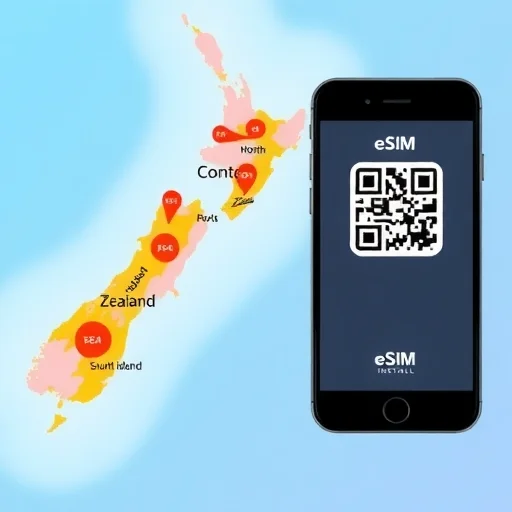
The key to picking the best eSIM for New Zealand comes down to three factors: the underlying local network, the plan structure, and your itinerary. If your trip is focused on cities like Auckland, Wellington, and Christchurch, any of the three networks will serve you well. But if you’re planning to drive the South Island’s West Coast, visit the Coromandel Peninsula, hike in Fiordland, or explore the far north near Cape Reinga, choosing an eSIM that runs on Spark’s network will give you the widest coverage. Some international eSIM providers offer “multi‑network” roaming that automatically selects the strongest available signal—a great option for travelers covering both islands.
Next, consider how you’ll use data. New Zealand is a country made for road trips, which means you’ll likely be using navigation extensively—often in areas with limited or no Wi‑Fi. eSIM plans for New Zealand generally fall into fixed‑total categories: you get a set amount of data (5GB, 10GB, 20GB, or more) valid for a specific period like 7, 15, or 30 days. Daily‑cap plans are available from some global providers but are less common than fixed totals. Unlimited high‑speed plans exist but can be expensive. For most travelers, a fixed‑total plan is the most straightforward: estimate your usage based on trip length and activities. If you’re relying heavily on GPS, streaming music or podcasts during long drives, and posting updates regularly, budget on the higher side.
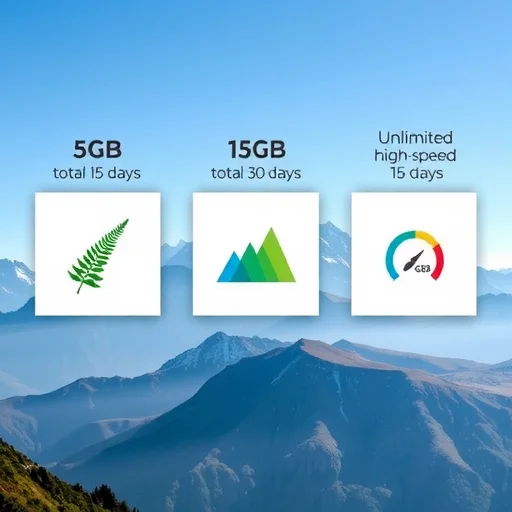
So which specific eSIM should you consider? For short trips (3 to 5 days) focused on a single city or region, a compact 3GB or 5GB fixed‑data eSIM from a reputable global provider like Airalo, Nomad, or Holafly is usually sufficient. You’ll use data for maps, restaurant searches, and social media. For week‑long stays (7 to 10 days) that include multiple regions—say, Auckland, Rotorua, and the Bay of Islands—10GB is a comfortable sweet spot. For extended road trips (two weeks or more) covering both islands, especially if you’re working remotely or staying in holiday parks where Wi‑Fi is limited, consider 15GB or 20GB. Some travelers also purchase a direct local prepaid eSIM upon arrival—Spark and One NZ both offer tourist eSIMs at airports in Auckland, Wellington, and Christchurch, which can provide excellent value and often include a local phone number and generous data allowances.
One detail that catches many travelers off guard: New Zealand’s mobile coverage is excellent in populated areas, but once you enter national parks, remote mountain passes, or coastal areas away from main highways, signal can drop off quickly—regardless of the carrier. The South Island’s West Coast, parts of the Southern Alps, and deep into Fiordland are notorious for patchy coverage. Downloading offline maps before heading into these areas is essential. Apps like Google Maps (with offline areas saved) and Maps.me are your friends. Having an eSIM with Spark’s network gives you the best chance of picking up signal when you’re near a small town or on a ridgeline, but it’s not a guarantee in the deepest wilderness.
Another practical consideration: New Zealand is a country where many activities—like booking a last‑minute helicopter flight, checking hut availability on the Great Walks, or getting weather alerts—require a reliable connection. Having a local network that works well in the areas you’re visiting can make trip logistics much smoother. If you’re planning to do the Tongariro Crossing or any of the Great Walks, real‑time weather apps are crucial for safety.
I recently helped a friend plan a three‑week New Zealand road trip that covered both islands. Her itinerary was ambitious: Auckland, Coromandel, Rotorua, Wellington, ferry to the South Island, then down the West Coast to Queenstown, and finally through the Mackenzie Basin to Christchurch. She was debating between a budget eSIM and a Spark‑based plan. I strongly recommended going with Spark for the rural coverage. We chose a 20GB fixed‑total Spark‑based eSIM from an international provider. She installed it before departure, and it activated upon arrival. Throughout the trip, she had coverage in places where other travelers on different networks didn’t—including sections of the West Coast, the road into Mount Cook, and parts of the Coromandel Peninsula. When her car had a flat tire on a remote stretch near Haast, she was able to call roadside assistance without issue. She told me later that the peace of mind alone was worth the small premium.
If you’re staying exclusively in cities and major towns, any eSIM will work, and you can prioritize price. If you’re road‑tripping, hiking, or exploring beyond the main tourist centers, investing in a Spark‑based plan with a generous data allowance is strongly recommended. And if you’re visiting for more than two weeks, consider buying a direct local Spark prepaid eSIM at the airport—these often include large data bundles and a local number, which can be handy for calling DOC (Department of Conservation) for track conditions or booking activities.
Choosing the best eSIM for New Zealand is about matching your itinerary to the carrier’s coverage strengths. Prioritize Spark for the widest rural coverage, especially if you’re heading to the South Island or remote parts of the North Island. Choose a data allowance that gives you buffer for navigation, weather updates, and sharing your adventure. A few minutes of planning before you go means you can navigate the country’s stunning landscapes with confidence, stay safe, and focus on the journey. For New Zealand, choose an eSIM based on your itinerary: Spark offers the most extensive rural coverage across both islands, essential for road trips and hiking. Fixed‑total plans suit most travelers; 10‑15GB is ample for a two‑week trip. Download offline maps for remote areas.
Spent 10 days in the North Island—Auckland, Rotorua, and the Bay of Islands. Used a One NZ eSIM from Airalo. Perfect coverage everywhere I went. 10GB was more than enough for maps and social media. Easy setup before I left.
Heads-up for hikers: I did the Tongariro Crossing and had signal on the trail near the summits with Spark. Some people with other carriers had nothing. Worth it for safety if you’re doing the Great Walks.
Used a 2degrees-based eSIM from a budget provider in Wellington and Christchurch. Fine in the cities, but lost signal as soon as I drove toward Kaikōura. Switched to a Spark-based plan mid-trip and it was much better. Don’t skimp on coverage if you’re driving.
I bought the Spark prepaid eSIM at Auckland Airport. Got 15GB plus a local number for a great price. The local number was useful for booking a campervan and calling DOC for track info. Highly recommend for longer trips.
Just finished a 3-week South Island road trip. Used a Spark-based eSIM from Saily. Had coverage in most of the West Coast, around Wanaka, and even in parts of Fiordland. Friends on other networks lost signal much earlier. Highly recommend Spark for South Island travel.