
If you’ve ever stood at a mobile store counter in a foreign country, staring at a wall of prepaid SIM cards with confusing names and data bundles, you know the feeling: all you want is one simple SIM card that just works. Whether you’re traveling for a week, a month, or relocating for work, the idea of juggling multiple SIMs, swapping cards, or managing roaming settings can feel overwhelming. The good news is that for most situations, one SIM card—if you choose it carefully—can absolutely meet all your connectivity needs. In this guide, I’ll walk you through how to pick the right single SIM for your situation, whether to choose physical or eSIM, how to handle the “one SIM” limitation, and what to do when one SIM isn’t quite enough.
Let’s start with the basics. When people say they want “one SIM card,” they usually mean one active line that handles everything: calls, texts, and data, both at home and while traveling. For many years, this meant buying a physical SIM from your local carrier and paying expensive roaming fees when you traveled. Today, the landscape has changed dramatically. With eSIM technology and the rise of global providers, it’s entirely possible to have one SIM that works across multiple countries, or to keep your home SIM active while adding temporary coverage without physically swapping cards. But the right approach depends entirely on your phone, your travel patterns, and whether you need a local number in your destination.
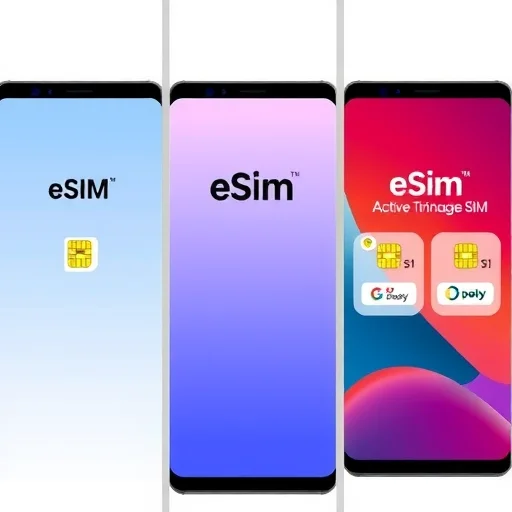
The first decision is physical SIM versus eSIM. A physical SIM is the traditional plastic card you insert into your phone. It’s simple, universal, and works with any unlocked phone. If you only want one SIM and your phone doesn’t support eSIM, a physical SIM is your only option. The advantage is that you can buy it at a store, pop it in, and it just works. The downside is that if you travel internationally, you either pay roaming fees or swap out your SIM for a local one—which means you no longer have “one SIM” in the sense of keeping your number active. An eSIM, on the other hand, is a digital SIM built into your phone. You can store multiple eSIM profiles, but you can usually only have one active at a time on many phones (though dual-active eSIM is becoming more common on newer devices). If your phone supports eSIM, you have more flexibility to add temporary coverage without removing your primary SIM.
Now let’s talk about the use cases where one SIM truly is enough. If you rarely travel internationally and your primary need is reliable service in your home country, a standard postpaid or prepaid SIM from a local carrier is all you need. You get a consistent phone number, predictable billing, and customer support in your language. The simplicity is hard to beat. For these users, the “one SIM” question is already solved.

The more interesting case is the traveler or digital nomad who wants one SIM that works across borders. In this scenario, global providers like Airalo, Holafly, and Nomad have created data-only eSIMs that work in dozens or even hundreds of countries. You buy one eSIM, install it on your phone, and it connects to local networks automatically as you travel. For example, a regional Europe eSIM might cover 30+ countries with a single purchase. You get one consistent data plan, one expiration date, and no swapping. The trade-off is that these plans are almost always data-only—you don’t get a local phone number for calls and texts. If you rely on WhatsApp, iMessage, or other app-based communication, this is fine. But if you need to make traditional phone calls or receive SMS verification codes, a data-only global eSIM won’t cover that.
What if you need both your home number and local connectivity, but you still want the simplicity of “one SIM”? This is where dual SIM functionality comes in, even though it technically uses two SIM profiles. Many modern phones allow you to keep your home physical SIM active for calls and texts while using an eSIM for travel data. On your phone, it appears as one combined service—you make calls from your home number, but your data comes from the travel eSIM. You never swap cards, and you never lose access to your regular number. For many travelers, this is the ideal “one SIM” experience in practice, even though it uses two profiles. You have one phone, one device to manage, and seamless connectivity across both home and travel needs.
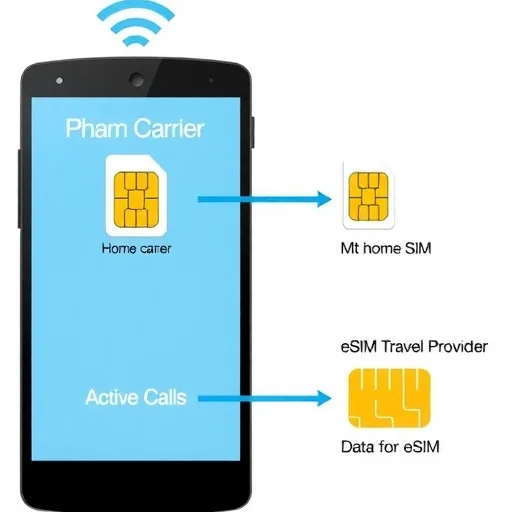
Let’s walk through a few scenarios to illustrate how this works in real life. Anna lives in New York and travels to Europe for three weeks every summer. She wants to keep her US number active so friends and family can reach her, but she doesn’t want to pay Verizon’s $10 per day roaming fee. She uses her physical SIM for calls and texts, and before she leaves, she buys a 20GB regional Europe eSIM from a global provider. She installs it on her phone, sets the eSIM as her data line, and keeps her Verizon SIM as her voice line. During the trip, her phone uses the eSIM for all data—maps, apps, social media—while her US number remains active for calls and texts. When she returns home, she simply turns off the eSIM profile. She never swapped a physical card, never lost her home number, and paid a fraction of what roaming would have cost.
Now consider David, who lives in the UK and spends a month each year working remotely from Southeast Asia. He needs a local number in Thailand to coordinate with co-working spaces and local services. He also needs reliable data for video calls and file transfers. His approach is different: he buys a local carrier eSIM from AIS in Thailand, which gives him a Thai phone number and 50GB of data. He installs this eSIM and uses it as his primary line during his stay, but he keeps his UK physical SIM active in the phone (with roaming turned off) so he can still receive iMessages and WhatsApp messages on his UK number over Wi-Fi. For him, having one active line during the stay is sufficient—he simply switches which SIM is primary depending on where he is.
What about someone who doesn’t travel frequently but needs a temporary SIM for a specific purpose—say, a month-long work assignment in a different city within the same country? In this case, the simplest solution is often a prepaid physical SIM from a local carrier in that region. You buy it, use it for the month, and then let it expire. Your primary SIM stays in your phone, but you swap them when needed. It’s not “one SIM” in the sense of never swapping, but it’s one active SIM at a time with minimal hassle.
There are situations where one SIM genuinely isn’t enough, and it’s important to recognize them. If you need to maintain two active numbers simultaneously—for example, a personal number and a business number that both receive calls and texts—you need dual SIM capability. Similarly, if you frequently travel to countries where eSIM support is limited or where global providers have poor coverage, you may need to use local physical SIMs in each destination. In these cases, the goal shouldn’t be “one SIM” but rather a streamlined system for managing multiple SIMs with minimal friction.
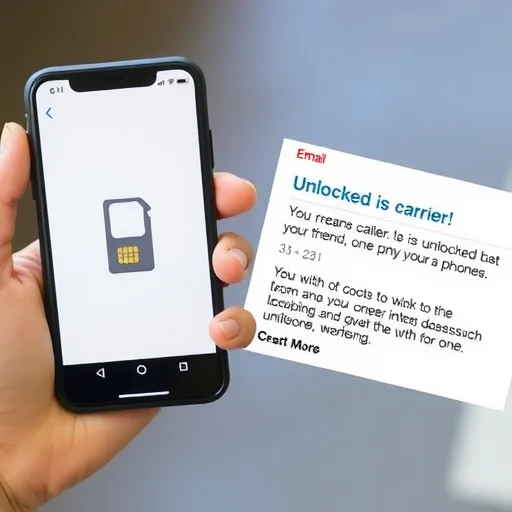
One often-overlooked factor is carrier locking. If your phone is locked to a specific carrier—common if you bought it on a payment plan—you may not be able to use a SIM from another carrier at all. Before you travel or consider switching, contact your carrier to confirm whether your phone is unlocked. If it is locked, you may need to request an unlock (which some carriers provide after the phone is paid off) before you can use a second SIM or eSIM from another provider.
Another practical consideration is managing your one SIM for the long term. If you’re a frequent traveler, consider whether a global provider’s annual plan or a carrier with generous international roaming might actually give you the simplicity you want. Some carriers now offer plans with included international data that work in dozens of countries, eliminating the need for separate travel SIMs. These plans are often more expensive per month than a local plan plus travel eSIMs, but they offer the ultimate simplicity: one SIM, one bill, one phone number, and connectivity almost anywhere you go.
Ultimately, the question of whether one SIM card is enough comes down to your specific needs. If you rarely travel internationally and just need reliable local service, one physical SIM from your local carrier is all you’ll ever need. If you travel frequently but don’t need a local number, one global eSIM can cover all your data needs across multiple countries. And if you need to maintain your home number while accessing affordable data abroad, a dual SIM setup using your physical SIM plus a travel eSIM gives you the best of both worlds—one phone, seamless connectivity, and no card swapping. The right solution is the one that fits your actual usage patterns, not the one that technically uses the fewest SIM cards. One SIM card can meet most connectivity needs, but the right approach depends on your travel patterns and phone capabilities. For local-only use, a physical SIM from your carrier is simplest. For frequent travelers, a data-only global eSIM covers multiple countries, while a dual SIM setup (physical home SIM plus travel eSIM) lets you keep your number active without roaming fees. Consider carrier unlocking and eSIM compatibility before purchasing.
Just a heads up: if you’re using a data-only eSIM for travel, make sure your home carrier doesn’t charge for “accidental” data roaming. I turned off roaming on my home SIM but still got a small charge once. Now I turn off mobile data for the home line entirely when traveling.
One SIM card works fine if you’re staying in one country. Once you start crossing borders, eSIMs become way more practical. I use a regional eSIM for Europe that covers everything with one purchase. One plan, one activation, 30+ countries. Can’t beat that.
I’ve been using the physical SIM + travel eSIM setup for years and it’s perfect. Keep my home number active for calls and texts, use a cheap data eSIM when traveling. One phone, zero swapping, never pay roaming fees. Highly recommend.
I learned the hard way that not all phones support eSIM. Bought a global eSIM for a trip only to find my older phone didn’t work with it. Always check compatibility before you buy!
I travel for work constantly and finally switched to a carrier with included international roaming. Yes, it costs more per month, but the simplicity of having one SIM that works everywhere is worth every penny. No more juggling eSIMs or buying local cards.