
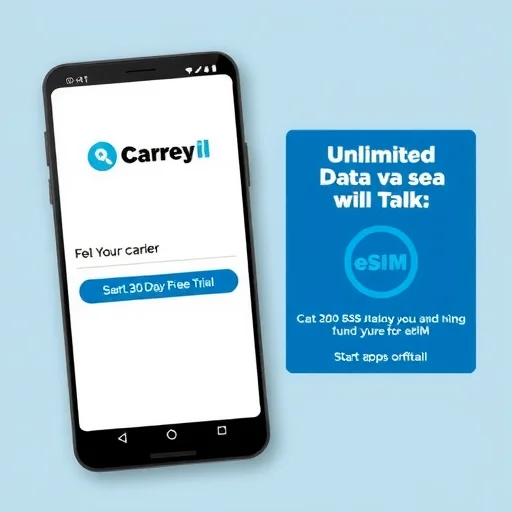
If you’ve been hearing about eSIMs and wondering whether they’re right for you—or if you’re considering switching your primary line to eSIM but want to test it first—a 30-day eSIM trial can be the perfect way to explore the technology without risk. Several carriers and eSIM providers offer trial periods that let you use a second line on your phone for free or at a low cost, giving you a chance to experience the convenience of eSIM before making any long-term commitment. In this guide, I’ll explain what a 30-day eSIM trial typically includes, how to find one, what to test during the trial, and how to decide whether eSIM is right for your needs.
First, let’s clarify what we mean by a “30-day eSIM trial.” There are two common types. The first is a free trial offered by carriers to let potential customers test their network coverage and service before signing up for a paid plan. In the US, for example, T-Mobile offers a “Network Pass” that gives you 30 days of free service on their network via eSIM, including unlimited data, calls, and texts. Other carriers in various countries have similar offers. The second type is a low-cost trial from eSIM providers that lets you test their platform with a small data package, often valid for 30 days, at a minimal cost. Both types serve the same purpose: they let you experience eSIM technology and evaluate a carrier’s service without a long-term commitment.
So why would you want a 30-day eSIM trial? The reasons vary depending on your situation. If you’re considering switching your primary line from physical SIM to eSIM, a trial lets you test the experience without porting your number first. You can add the trial eSIM as a second line and use it for data, calls, and texts alongside your existing line. This lets you evaluate coverage in your area, call quality, data speeds, and the overall reliability of the network before you make the switch. If you’re traveling and want to test a global eSIM provider before committing to a longer plan, a low-cost trial gives you confidence that the service works as advertised. And if you’re simply curious about eSIM technology, a free trial is a no-risk way to learn how it works.
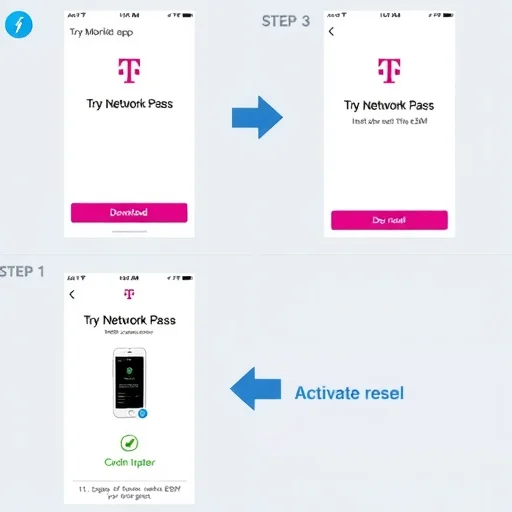
Let’s look at the most prominent 30-day eSIM trial available today. T-Mobile’s Network Pass is one of the best-known options. It’s available to anyone in the US with an unlocked, eSIM-compatible phone. You download the T-Mobile app, sign up for the Network Pass, and within minutes, you install a free eSIM on your phone. The trial gives you 30 days or 30GB of data (whichever comes first) of unlimited talk, text, and data on T-Mobile’s network. You can use it alongside your existing carrier’s service—your phone will have two active lines. This allows you to compare T-Mobile’s coverage and speeds to your current carrier in real time. You can make calls, send texts, and use data on the T-Mobile line, all for free, with no obligation to continue after 30 days.
Other carriers have similar offers, though they may vary by country. In the UK, some MVNOs (mobile virtual network operators) offer free or low-cost eSIM trials. In other countries, you may find promotional offers from carriers looking to attract new customers. Additionally, global eSIM providers like Airalo and Holafly occasionally offer discounted “starter” eSIMs with small data packages (e.g., 1GB for 30 days) at prices as low as $5 to $10, which effectively serve as a trial of their platform.
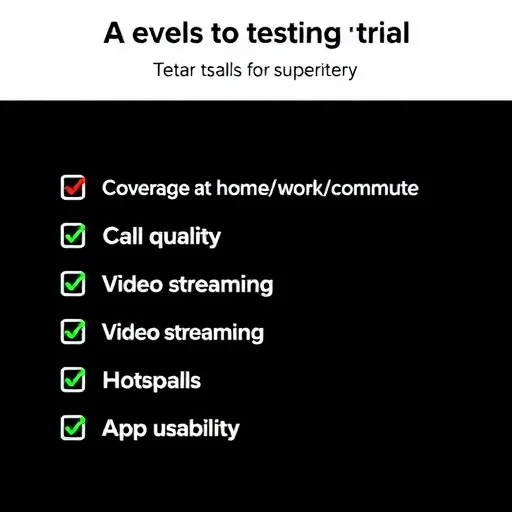
Now, let’s talk about what you should actually test during your 30-day eSIM trial. The goal is to evaluate whether eSIM works for your specific needs, so you need to use it as you would normally use your phone. Here are the key areas to focus on.
First, test network coverage in the places you frequent. If you’re trying a new carrier, use the trial eSIM as your data line when you’re at home, at work, on your commute, and anywhere else you typically go. Compare the signal strength and data speeds to your current carrier. You can use speed test apps like Ookla Speedtest to measure download and upload speeds in different locations. Pay attention to coverage indoors, in basements, in elevators—places where signal can be weak.
Second, test call quality and reliability. Make several calls using the trial eSIM’s phone number. Test calls in different locations, including moving in a car or train. Check if calls drop, if there’s static or delay, and if Wi-Fi calling works when you’re connected to Wi-Fi. If you rely on your phone for work calls, this is especially important.
Third, test data performance for your typical activities. Stream video on the trial eSIM—watch a few minutes of YouTube or Netflix to see if it buffers or plays smoothly. Use video calling apps like FaceTime, Zoom, or WhatsApp to see if the connection is stable. Download a large file or app update to see how long it takes. If you use your phone as a hotspot, test that feature as well—some eSIM plans allow tethering, some don’t.
Fourth, test the activation and management experience. How easy was it to install the eSIM? Did you have to call customer service or was it fully automated? How is the carrier’s app? Can you easily see your data usage, add funds, or make changes? The user experience matters, especially if you’ll be managing your eSIM while traveling or away from home.
Let’s walk through a real-world example. Emma currently has Verizon as her primary carrier in the US, but she’s heard that T-Mobile has better 5G coverage in her city. She’s considering switching but doesn’t want to port her number and find out the coverage isn’t actually better. She downloads the T-Mobile app and signs up for the Network Pass. Within minutes, she has a T-Mobile eSIM installed on her iPhone, alongside her Verizon physical SIM. She labels them “Verizon” and “T-Mobile Trial.” For the next 30 days, she uses the T-Mobile eSIM as her data line during the week, while keeping her Verizon line for calls (since her number is still with Verizon). At home, at her office, and on her commute, she runs speed tests and makes test calls on the T-Mobile line. She discovers that T-Mobile’s 5G speeds are indeed faster in her neighborhood, but coverage in her office basement is worse than Verizon. By the end of the 30 days, she has real data to make an informed decision. She decides to keep Verizon for now, but she’s glad she tested rather than switching blindly.
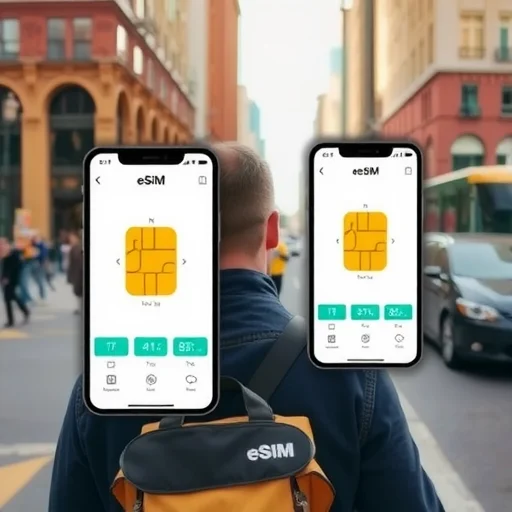
Now consider James, who is planning a trip to Europe and wants to use a global eSIM provider for the first time. He’s never used eSIM before and wants to make sure he understands the process before he’s abroad. He buys a low-cost “starter” eSIM from a global provider that offers 1GB of data valid for 30 days for $5. He installs it on his phone while still at home. He practices switching between his primary line and the trial eSIM, setting the trial eSIM as his data line, and understanding how the dual SIM setup works. He makes sure his phone is unlocked and that the installation process is smooth. By the time he travels, he’s confident in how eSIM works and can buy a larger plan for his actual trip without any last-minute confusion.
What about testing eSIM for a secondary line? If you’re considering adding a second line for work or privacy reasons, a 30-day trial from a carrier or eSIM provider can help you evaluate whether having two lines on one phone fits your workflow. You can test how calls and texts come in on both lines, how you choose which line to call from, and whether the separation between work and personal is as clean as you’d like. Some carriers offer trials specifically for secondary lines; others simply let you use their standard trial as a second line alongside your primary.
One important note: if you’re trying a carrier’s free trial like T-Mobile Network Pass, the trial eSIM will have its own phone number. This is great for testing call quality, but it’s not your primary number. If you decide to switch carriers after the trial, you’ll need to port your existing number to the new carrier. The trial lets you test the network, not the number porting process. If you want to test the porting experience, you might need to actually sign up for a paid plan, though some carriers offer a “test drive” that allows you to keep the trial number if you convert to a paid plan.
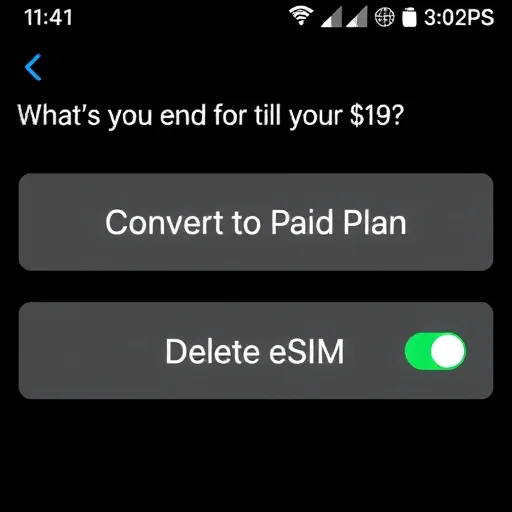
Let’s also talk about what to do after the trial. If you’re satisfied with the carrier or eSIM provider, you can typically convert the trial to a paid plan. For T-Mobile’s Network Pass, you can sign up for a regular plan and port your number. For global eSIM providers, you can simply purchase a larger data pack for your next trip. If you’re not satisfied, you simply delete the eSIM profile from your phone. There’s no contract, no cancellation fee, and no obligation to continue.
One more consideration: compatibility. Before you start any eSIM trial, make sure your phone is unlocked and eSIM-compatible. Most modern smartphones are, but it’s worth checking. On iPhone, go to Settings > General > About and look for “Carrier Lock”—it should say “No SIM restrictions.” On Android, the location varies, but you can check in Settings > About Phone > Status. Also ensure your phone supports eSIM. iPhones from the XS onward, Google Pixels from the 3 onward, and recent Samsung Galaxy flagships all support eSIM. If your phone is locked to a carrier, you won’t be able to add a trial eSIM from another carrier.
In summary, a 30-day eSIM trial is an excellent way to test eSIM technology and evaluate a carrier’s network without commitment. Whether you’re considering switching your primary carrier, planning to use eSIM for travel, or just curious about how dual SIM works, a free or low-cost trial gives you the opportunity to learn, compare, and decide with real-world experience. Use the trial to test coverage in your daily locations, call quality, data speeds, and the overall user experience. By the end of 30 days, you’ll know whether eSIM is right for you. A 30-day eSIM trial lets you test eSIM technology and carrier networks risk-free. T-Mobile’s Network Pass offers 30 days of free unlimited data, calls, and texts in the US. Low-cost starter eSIMs from global providers (e.g., 1GB for $5) let you practice installation and dual SIM management before travel. Use trials to evaluate coverage in your daily locations, call quality, data speeds, and the overall user experience before committing to a paid plan or switching carriers.
TestDriveBeforeYouSwitchFINISHED
One thing to know: the trial eSIM gets its own number. So if you’re testing call quality, it’s accurate, but you’re not testing number porting. Still, for coverage and data speeds, it’s perfect.
I used T-Mobile’s Network Pass to test their coverage before switching from Verizon. 30 days of free unlimited data, installed in minutes. Found out T-Mobile was actually faster in my neighborhood. Made the switch with confidence. Highly recommend.
Did the T-Mobile trial alongside my AT&T line for a month. Ran speed tests everywhere I went. AT&T was better at my office, T-Mobile better at home. Ended up staying with AT&T but glad I tested first. No risk, no cost.
I used a cheap 1GB/30-day eSIM from a global provider to practice before a big trip. Learned how to install, switch lines, and manage data. By the time I traveled, I was totally confident. Best $5 I ever spent on preparation.
Make sure your phone is unlocked before trying any eSIM trial. My friend’s phone was still locked to her carrier and she couldn’t install the trial eSIM. Check before you start!