
If you’re a heavy data user—streaming video, working remotely, or tethering multiple devices—you’ve likely looked into unlimited data plans with 5G speeds. A 5G SIM card (whether physical or eSIM) that offers unlimited data can be a game‑changer, especially for travelers, digital nomads, and anyone who doesn’t want to count gigabytes. But not all “unlimited” plans are the same. This guide explains what a 5G SIM card with unlimited data actually delivers, how to choose one, and what to watch out for.
First, let’s clarify what “unlimited” means in the context of 5G SIM cards. True unlimited data means you can use as much data as you want without being charged overage fees. However, many “unlimited” plans have fair usage policies—after you use a certain amount of high‑speed data (e.g., 20GB, 50GB), your speeds may be throttled (reduced) during peak times or for the remainder of the billing period. Some plans truly have no throttling, but they are often more expensive or only available from certain carriers. Understanding these nuances is key to choosing the right plan.
There are two main types of 5G SIM cards: physical SIM cards and eSIMs. Physical SIMs are the traditional removable cards; eSIMs are digital profiles you download. Both can offer unlimited 5G data. For travelers, eSIMs are particularly convenient because you can buy and install them before you depart. For residents, physical SIMs or eSIMs from local carriers are often the best value.
Now, let’s look at where you can get a 5G SIM card with unlimited data. Options vary by region:
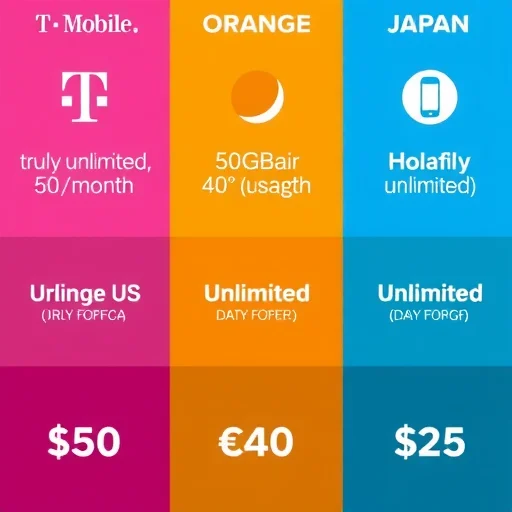
**In the United States**, carriers like T‑Mobile, Verizon, and AT&T offer unlimited 5G plans. T‑Mobile’s “Go5G” and “Magenta” plans, for example, offer truly unlimited data with no throttling, though video streaming may be capped at certain resolutions. Prepaid options like T‑Mobile’s “Simply Prepaid” also offer unlimited data with 5G. For travelers, global eSIM providers like Holafly offer unlimited 5G data in the US for a fixed number of days.
**In Europe**, local carriers like Deutsche Telekom (Germany), Orange (France), and Vodafone (Spain) offer unlimited 5G plans, often with fair usage limits around 50–100GB per month before throttling. Travel‑focused eSIMs like Holafly’s Europe plan offer unlimited data with 5G across multiple countries, making them popular for multi‑country trips.
**In Asia**, carriers like NTT Docomo (Japan), SK Telecom (South Korea), and CelcomDigi (Malaysia) offer unlimited 5G plans. For travelers, global eSIM providers often include unlimited options in these countries.
**Global eSIM providers**: Holafly is the most well‑known for unlimited data eSIMs, with 5G in many countries. Airalo, Nomad, and Ubigi also offer unlimited plans in select destinations, though they more commonly offer fixed‑total plans.
So, who should consider a 5G SIM card with unlimited data? The obvious candidates are heavy data users. If you stream video daily, join video calls for work, tether your laptop, or use cloud services extensively, a fixed‑total plan can be stressful. Unlimited data gives you peace of mind. Travelers who rely on their phone for navigation, translation, social media, and entertainment may also prefer unlimited to avoid topping up mid‑trip. Families or groups sharing a hotspot also benefit.
However, unlimited plans aren’t always necessary. If you primarily use Wi‑Fi at home or in hotels, a fixed‑total plan with 5–10GB per week may be sufficient and cheaper. For light users, unlimited is overkill.
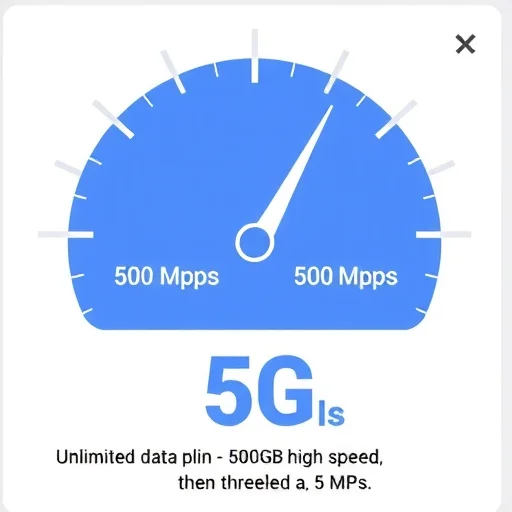
Let’s talk about performance. A 5G SIM card with unlimited data can deliver download speeds of 100 Mbps to over 1 Gbps, depending on the carrier and location. This makes tasks like downloading large files, streaming 4K video, and video conferencing seamless. However, if a plan has throttling after a certain threshold, you may experience reduced speeds after heavy usage. For example, some “unlimited” plans may throttle to 3G speeds after 50GB. This can make the plan nearly unusable for streaming or tethering. Always read the fine print.
Another factor is coverage. 5G is not available everywhere. If you’re in a rural area or a country with limited 5G rollout, your “5G SIM card” will fall back to 4G, which is still fast but not as blazing. Unlimited data on 4G is still useful, but you’re not getting the full 5G benefit. Check coverage maps for your destination before committing.
Now, let’s look at a few real‑world scenarios.
**Scenario 1: Digital nomad in Spain.** You’re working remotely from Barcelona for a month. You need to join video calls, upload large files, and tether your laptop. You buy a local Orange prepaid eSIM with unlimited 5G data (50GB fair usage) for €40. You have fast 5G in the city, and even after 50GB, the throttled speed is sufficient for email and messaging, though you’d notice it for video calls. If you need truly unlimited, you might pay more for a business plan.
**Scenario 2: Family vacation in Japan.** You’re traveling with two teens who stream video constantly. You buy a Holafly unlimited 5G eSIM for 14 days for $65. The entire family shares a hotspot. You don’t worry about data caps, and 5G coverage in Tokyo and Kyoto is excellent. The cost is comparable to buying multiple fixed‑total plans.
**Scenario 3: Business traveler in the US.** You’re in New York for a week, attending meetings and doing video calls. You buy a T‑Mobile prepaid unlimited 5G plan for $60. You have 5G everywhere in the city, and the plan is truly unlimited with no throttling. You use over 30GB of data without issue.
When choosing a 5G SIM card with unlimited data, consider these factors:
**Fair usage policy**: Is there a high‑speed data cap? What are throttled speeds? Some plans throttle to 5 Mbps, which is still usable for streaming; others throttle to 2G speeds, which is barely usable.
**Coverage**: Does the carrier have 5G in the areas you’ll be? Use coverage maps.
**Device compatibility**: Does your phone support 5G? Check bands for your destination.
**Duration**: For short trips, unlimited eSIMs from global providers are convenient. For long stays, local carrier plans offer better value.
**Tethering**: Does the plan allow hotspot/tethering? Some unlimited plans restrict tethering or limit its speed.
I’ve used both unlimited and fixed‑total plans. On a month‑long work trip to Spain, I used a local Orange unlimited plan with 50GB fair usage. I hit the cap after three weeks (I tether heavily), and the throttled speed was frustrating for video calls. Next time, I’d either pay for a higher‑tier plan or supplement with a secondary eSIM. On a family trip to Japan, a Holafly unlimited eSIM was perfect—no one worried about data, and the 5G speeds were excellent.
In summary, a 5G SIM card with unlimited data is a powerful tool for heavy users, travelers, and digital nomads. It eliminates the stress of counting gigabytes and allows you to use your phone to its full potential. However, not all unlimited plans are equal. Pay attention to fair usage policies, coverage, and tethering restrictions. Choose a plan that matches your usage patterns and destination, and you’ll enjoy fast, worry‑free connectivity. A 5G SIM card with unlimited data offers worry‑free high‑speed connectivity, ideal for heavy users, travelers, and digital nomads. Key considerations: fair usage policies (high‑speed caps and throttled speeds), 5G coverage in your destination, tethering allowances, and device compatibility. Unlimited eSIMs from global providers like Holafly are convenient for short trips; local carrier plans often offer better value for long stays.
TravelDataGuideFINISHED

I’m a digital nomad and use a T-Mobile unlimited plan in the US. Truly unlimited, no throttling. 5G speeds are insane. I use over 100GB a month with tethering. Worth every penny.
For a family trip, unlimited is the way to go. We used a Holafly Europe eSIM and shared the hotspot. No fighting over data limits. 5G was great in cities, 4G was fine in rural areas. Will use again.
I used a Holafly unlimited eSIM for 2 weeks in Japan. Streamed video, used maps constantly, tethering for my laptop. Never worried about data. 5G was fast everywhere. Highly recommend for travelers who don’t want to think about data caps.
Important tip: Read the fair usage policy! I bought an “unlimited” plan in Italy that throttled after 30GB. After that, I could barely load maps. Switched to a plan with a higher cap. Don’t assume all unlimited plans are the same.
I’m a light user—maps and social media—so unlimited is overkill for me. I stick with fixed‑total plans and save money. But I can see the appeal for heavy users. Great breakdown of the options.