
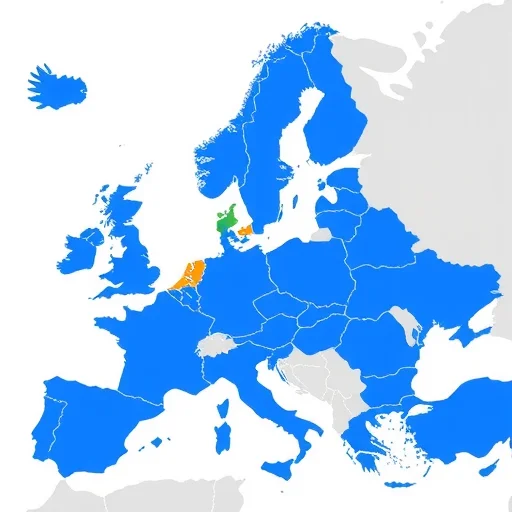
If you’ve been looking into eSIM options for travel or a secondary line, you’ve probably come across something labeled “02 eSIM” and wondered what exactly that means. Is it a specific plan? A provider? A type of service? The short answer is that 02 is a major mobile carrier in several European countries—most notably the UK, Czech Republic, Slovakia, and Germany—and they offer eSIM support just like many other modern carriers. But the term “02 eSIM” can also refer to eSIM plans available on the 02 network through third-party providers. In this guide, I’ll clarify exactly what an 02 eSIM is, how to get one, whether it’s the right choice for your needs, and how it compares to other eSIM options available today.
Let’s start with the basics. O2 (often styled as 02 in logos) is one of Europe’s largest telecommunications companies. They operate their own physical network infrastructure in multiple countries, meaning when you use an O2 eSIM, you’re connecting directly to O2’s towers rather than being resold through another carrier. This is important because it typically means more reliable coverage, better prioritization on the network during congested times, and direct access to O2’s customer support if something goes wrong. For travelers visiting the UK, Germany, or other O2 service areas, an O2 eSIM can be an excellent option because it combines the convenience of eSIM technology with the reliability of a major local carrier.
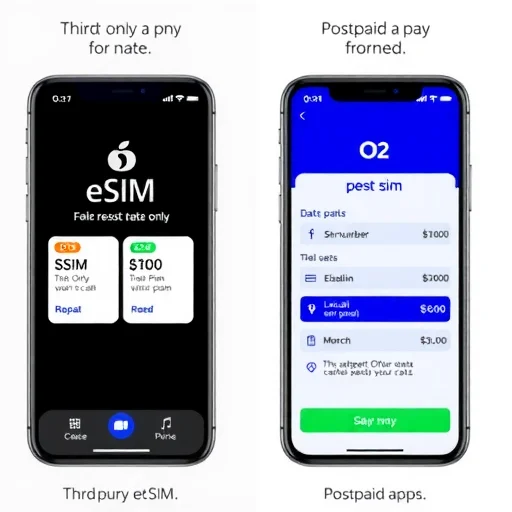
So how do you actually get an O2 eSIM? There are two main paths. The first is direct from O2 itself. If you’re a resident in one of the countries where O2 operates, you can sign up for a postpaid or prepaid plan and request an eSIM either through their app, website, or in a retail store. For residents, this functions like any traditional carrier relationship—you get a local phone number, choose a data and talk plan, and manage your account through O2’s systems. The eSIM is simply the format your SIM takes; otherwise, the service is identical to a physical SIM from O2. Activation usually takes a few minutes, and you can have your new line working almost immediately after completing the signup process.
The second path, and the one most travelers will use, is purchasing an O2 eSIM through a third-party eSIM provider. Companies like Airalo, Nomad, and others sometimes offer eSIM plans that run on O2’s network in specific countries. In these cases, you’re buying a data-only plan that uses O2’s infrastructure, but your account is managed by the third-party provider. This is often the most convenient option for short-term visitors because you can purchase and install the eSIM entirely online, without needing to present ID at a local store or sign a contract. Plans typically range from 1GB to 20GB, valid for periods of 7 to 30 days, and prices vary based on data allowance.
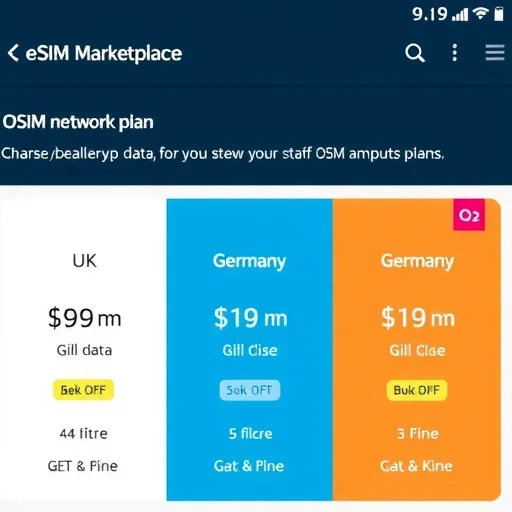
Now, what makes an O2 eSIM specifically worth considering? The primary advantage is network quality. O2 has extensive coverage in urban areas, good penetration in buildings, and generally reliable speeds. In the UK, O2 is one of the four major networks, alongside EE, Vodafone, and Three. While no network is perfect everywhere, O2 consistently ranks well for overall coverage and customer satisfaction. If you’re visiting London, Manchester, Birmingham, or other major UK cities, an O2 eSIM will likely give you strong, consistent service. The same applies in Germany, where O2 has a significant presence, though coverage in very rural areas can be more variable—always worth checking a coverage map for your specific destinations before purchasing.
But there are trade-offs to understand. If you purchase an O2 eSIM directly from O2 as a visitor, you may need to visit a store in person, show identification, and potentially provide a local address. This can be cumbersome if you’re only in the country for a few days. That’s why many travelers prefer third-party eSIM providers that offer O2 network access—they simplify the purchase process dramatically. However, those third-party plans are usually data-only. You won’t get a local phone number for calls and texts, and you may not have access to O2’s customer support if you encounter issues. For most travelers who primarily need data for maps, messaging, and apps, that’s perfectly fine. But if you need a local number to make calls or receive SMS verifications, you’ll want the direct O2 option instead.
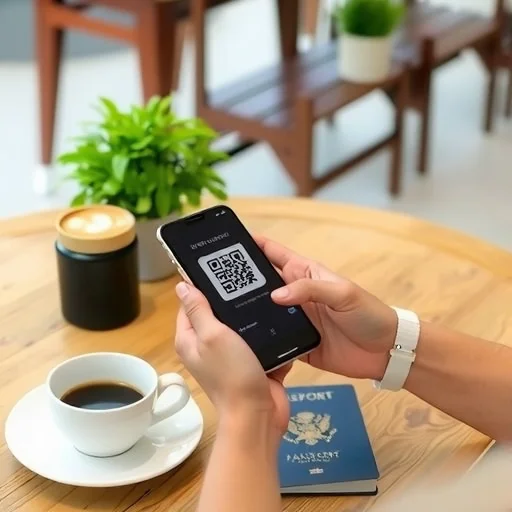
Let’s consider a few real-world scenarios to help you decide. Emma is traveling from the US to London for a week-long business trip. She needs reliable data for maps, ride-hailing apps, email, and occasional video calls. She purchases a 10GB data-only eSIM from a third-party provider that uses O2’s network. Before she even boards her flight, she installs the eSIM profile. When she lands at Heathrow, she turns off airplane mode, and within seconds she has data. She doesn’t need a local phone number because she uses WhatsApp and iMessage for communication, and her US carrier handles any calls over Wi-Fi. Total cost: around $15. Compared to paying her US carrier’s international roaming fees—which could be $10 per day—she saves over $50 on her week-long trip.
Now consider James, a student moving to Manchester for a semester abroad. He needs a local UK phone number to open a bank account, register with a local GP, and communicate with his university. A data-only eSIM from a third party won’t give him that number. Instead, he visits an O2 store with his passport and student visa, signs up for a prepaid plan, and requests an eSIM. He gets a UK phone number, a generous data allowance, and the ability to make local calls and receive SMS verification codes. The eSIM format means he can keep his home country physical SIM in his phone for emergencies while using O2 for his day-to-day needs. For his situation, the direct O2 eSIM is the clear winner.
One technical point worth noting is device compatibility. Most modern smartphones support eSIM—iPhone XS and newer, Google Pixel 3 and newer, recent Samsung Galaxy flagships—but it’s always worth checking your specific model before committing to any eSIM plan. Additionally, if you plan to use dual SIM functionality with a physical SIM and an eSIM, ensure your phone supports dual active SIMs. Most recent models do, but some older phones may only allow one active line at a time.
For travelers moving between multiple European countries, an O2 eSIM can still be useful, but with limitations. O2’s network is strongest in the UK, Germany, and Czech Republic. If your itinerary includes France, Italy, Spain, or other countries outside O2’s direct coverage area, you may experience roaming onto partner networks. While this generally works, speeds can be slower, and data allowances may be restricted depending on your plan. In these cases, a regional eSIM that covers multiple countries with local partners in each might serve you better than one tied to a single carrier’s network.
Ultimately, whether an O2 eSIM is right for you comes down to three questions: Are you visiting a country where O2 is a primary carrier? Do you need a local phone number or just data? And how long will you be staying? For short visits where data is your main need, third-party O2 network eSIMs offer a frictionless, affordable solution. For longer stays or situations requiring a local number, going directly through O2 gives you full service and local support. Both options are legitimate—they just serve different needs. An O2 eSIM provides reliable mobile connectivity on O2’s network in the UK, Germany, and other European countries. Travelers can choose either a data-only eSIM through third-party providers for short-term convenience, or a direct O2 eSIM with a local phone number for longer stays or situations requiring calls and SMS. The right choice depends on your specific needs for data versus full service.
Used an O2 eSIM from a third-party provider on my trip to London and it worked flawlessly. Got 5GB for 15 days, speed was great even on the Tube in some stations, and activation was just scanning a QR code before I left. Definitely recommend for tourists.
I made the mistake of buying a third-party O2 eSIM when I actually needed a local UK number for banking. Learned the hard way that data-only doesn’t give you SMS. Great for internet, not great if you need verification texts.
O2 direct eSIM user here in Germany. Setup was easy through their app, but they did require a local address and ID verification. Took about 20 minutes total. Service has been solid—better coverage than I expected in Berlin suburbs.
Just a heads up: O2’s network in the UK is good but not perfect in very rural areas like the Lake District or Scottish Highlands. If you’re heading to remote spots, maybe check coverage maps or have a backup. For cities, it’s excellent.
The dual SIM capability is what sold me. I kept my US physical SIM for iMessage and calls over Wi-Fi, added an O2 eSIM for UK data. Worked perfectly for my 3-month stay. No SIM swapping, no losing tiny cards. I’m never going back to physical for travel.