
If you’ve started researching eSIMs for an upcoming trip, you’ve likely noticed there are dozens of providers—Airalo, Nomad, Holafly, Saily, Ubigi, and many more—each claiming to be the best. The truth is, there’s no single “best” eSIM provider for everyone. The right choice depends entirely on where you’re going, how long you’ll be there, how much data you use, and whether you need a local phone number. This guide breaks down the key factors to compare so you can confidently pick the provider that matches your travel style.
First, let’s understand the landscape. eSIM providers generally fall into three categories. Global specialists like Airalo, Nomad, Holafly, and Saily focus exclusively on travelers. They offer plans for hundreds of countries, have polished apps, and prioritize ease of use—you buy and install before departure, and you’re connected upon arrival. Most of their plans are data‑only, though some now offer voice options in select countries. Local carrier eSIMs—like Telcel in Mexico, Spark in New Zealand, or Orange in Poland—are offered directly by the mobile operators in each country. These often provide better value for longer stays, include a local phone number, and offer unlimited talk and text. The trade‑off is that they require a bit more setup and are usually purchased after arrival. Regional aggregators are platforms that resell plans from multiple local carriers, offering a curated selection without the need to visit a carrier store. Each category serves different travel needs.
So how do you choose? Start by considering your destination and itinerary. If you’re visiting a single country for a short trip (3 to 10 days), a global specialist is often the most convenient. You can buy a plan before you leave, install it once, and it works when you land. If you’re staying longer—two weeks or more—or if you need a local phone number for calls and SMS, a local carrier eSIM often gives you better value. For multi‑country travel within one region (like Europe or Southeast Asia), look for a global specialist that offers regional plans—these cover multiple countries with a single eSIM and are usually cheaper than buying separate plans for each country.
Next, evaluate the network partner. In many countries, coverage varies significantly between carriers. A global provider might partner with a second‑tier network to offer cheaper plans, but you’ll regret it when you’re in a rural area with no signal. Reputable global providers usually partner with top local carriers, but it’s worth checking—especially if you’re visiting destinations with challenging geography. Some providers now offer “multi‑network” plans that automatically switch to the strongest available signal; these are ideal for travelers covering diverse regions or road‑tripping through rural areas.
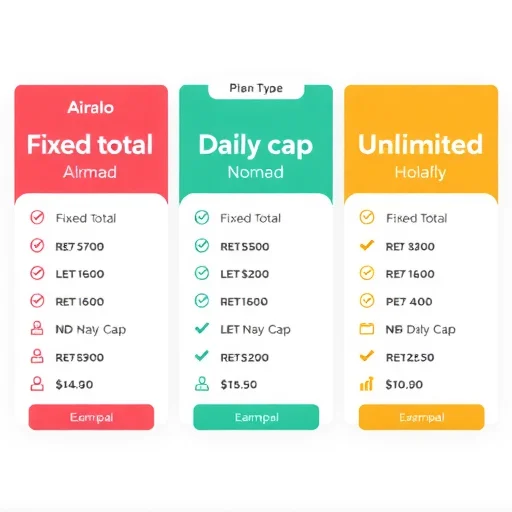
Data structure is another key differentiator. Plans typically come in three formats. Fixed‑total plans give you a set amount of data (3GB, 5GB, 10GB, etc.) that you use until it runs out, with a validity period like 7, 15, or 30 days. These are great for light to moderate users who know their habits. Daily‑cap plans offer a certain amount of high‑speed data per day (e.g., 500MB or 1GB) followed by unlimited but throttled speeds. These provide predictability and are popular with travelers who use navigation heavily or want to avoid surprise overages. Unlimited high‑speed plans are best for heavy users—digital nomads, streamers, or anyone on video calls—but they come at a premium. Different providers specialize in different plan structures, so match your usage style to the provider’s strengths.
Voice and SMS capability is a critical factor that’s often overlooked. Most global specialist eSIMs are data‑only. That means WhatsApp, FaceTime, and Skype work perfectly, but you won’t have a traditional phone number for voice calls or SMS verification. If you need to make local calls—to a hotel, tour operator, or rental car company—or if you need to receive verification codes (for ride‑hailing apps like Grab or Kakao T), look for a provider that offers voice plans. Some global providers now have “with voice” options for popular destinations. Alternatively, local carrier eSIMs always include a local number.
Ease of use varies significantly. Most global specialists have polished apps that guide you through installation, let you top up easily, and provide customer support in English. Local carrier eSIMs may require scanning a QR code from a physical voucher, visiting a store, or navigating a website in the local language. If you’re not comfortable with tech or want a fully digital, self‑service experience, a global specialist is the safer choice.
Let’s compare a few well‑known providers to illustrate how these factors play out.
Airalo is one of the largest global specialists. It offers plans for over 200 countries and regions, with a strong focus on fixed‑total plans. Its app is intuitive, installation is straightforward, and it partners with top local carriers in most destinations. Airalo is an excellent choice for travelers who want a reliable, no‑frills data plan for short to medium trips. It’s data‑only, so if you need voice, you’ll need to look elsewhere.
Nomad is another popular global specialist with a slightly different focus. It offers both fixed‑total and daily‑cap plans, giving users flexibility. Its regional plans are competitively priced, and it’s known for good customer support. Like Airalo, it’s data‑only, but it offers voice plans in a few countries.
Holafly specializes in unlimited data plans. If you’re a heavy data user—someone who streams video, joins video calls, or just wants the peace of mind of never worrying about running out—Holafly is a strong contender. It offers unlimited plans in many countries, but they tend to be more expensive per day than fixed‑total plans for light users. Holafly also offers some plans with a local number, which is a plus.
Saily, from the team behind NordVPN, is a newer entrant. It focuses on simplicity and transparency, with clear pricing and a user‑friendly app. Its plans are fixed‑total, and it partners with top local carriers. It’s a solid option for travelers who value a clean, straightforward experience.
Local carrier eSIMs vary by country, but they’re worth considering for longer stays. For example, in Japan, buying a direct eSIM from IIJmio or NTT Docomo can give you 10GB for around $15–$20, often with a local number. In Mexico, Telcel’s prepaid eSIM offers 20GB plus a local number for around $30. In the US, Verizon’s prepaid eSIM gives you rural coverage that global providers’ T‑Mobile‑based plans can’t match. The trade‑off is that you usually need to purchase after arrival, and setup may involve registering with your passport.
I’ve personally used multiple providers depending on the trip. For a one‑week city trip in Japan, I used Airalo—it was simple, affordable, and worked perfectly. For a month‑long remote work stay in Mexico, I bought a local Telcel eSIM with a local number—it was cheaper per GB and gave me voice capability. For a three‑week backpacking trip across Southeast Asia, I used a regional plan from Nomad that covered Thailand, Vietnam, and Singapore without a hitch. Each time, the “best” provider was the one that matched the trip.
When comparing providers, don’t just look at price per GB. Consider the provider’s reputation, the underlying network, the ease of installation and top‑ups, customer support quality, and whether the plan structure fits your usage. A slightly more expensive plan that uses a better network and has a simple app might be worth the extra cost, especially if you’re relying on it for navigation and communication.
Ultimately, the best eSIM provider is the one that aligns with your destination, trip length, data habits, and whether you need voice. Start by answering those questions, then filter the options. With a little planning, you can land in any country and be connected instantly—no more hunting for SIM cards, no more roaming bill surprises. The best eSIM provider depends on your travel style: global specialists (Airalo, Nomad) offer convenience for short trips; local carrier eSIMs provide better value and a local number for long stays; unlimited specialists (Holafly) suit heavy data users. Prioritize network reliability and plan structure over the lowest price.
TravelDataTipsFINISHED
For long stays, local carrier eSIMs are unbeatable. I spent 2 months in Mexico and used Telcel’s prepaid eSIM. 30GB plus a local number for around $30. Way better than any global provider for that length.
Important tip: If you need a local number for apps like Grab or Kakao T, data‑only eSIMs won’t work. I learned this in South Korea. Always check if your destination’s key apps require SMS verification.
I’ve used Airalo for trips to Japan, France, and the US. Never had an issue. Installation is easy, and the data has always worked. For short city trips, it’s my go‑to.
Nomad is my favorite for multi-country travel. Used their Europe regional plan for 3 weeks across 5 countries. Seamless. Their customer support responded in minutes when I had a question.
Heads-up: Holafly’s unlimited plans are great for heavy users, but check the fair usage policy. Some have daily caps after a certain threshold. Still, it’s peace of mind if you’re streaming a lot.