
If you’re setting up a new phone or planning an international trip, you’ve probably encountered the term “eSIM” and wondered how it differs from the physical SIM cards we’ve used for decades. The core difference is simple: a physical SIM is a removable plastic card that stores your network credentials, while an eSIM is a digital SIM embedded directly into your phone’s hardware. But the implications of that difference—for convenience, flexibility, and how you manage your mobile service—are significant. This guide breaks down the key distinctions, the pros and cons of each, and helps you decide which is right for you.
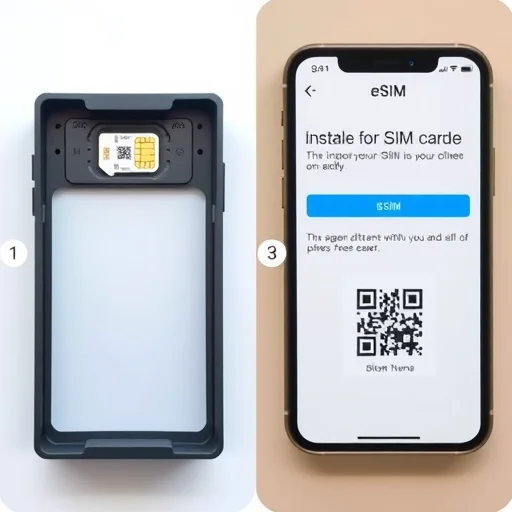
First, let’s understand what each one actually is. A physical SIM (Subscriber Identity Module) is a small, removable card that you insert into your phone. It contains your subscriber information—your phone number, network authentication keys, and sometimes a small amount of storage for contacts. When you switch carriers, you typically swap out the physical SIM. An eSIM (embedded SIM) is a digital version of the same technology. It’s a chip soldered onto your phone’s motherboard that can be programmed with multiple carrier profiles. Instead of inserting a card, you download an eSIM profile from your carrier via a QR code or an app. The eSIM does everything a physical SIM does, but without the physical component.
Now, let’s talk about the practical differences.
**Convenience and Flexibility:** This is where eSIM shines. With a physical SIM, you need to obtain a physical card—either shipped to you or picked up at a store—and physically insert it into your phone. To switch carriers, you swap cards. With eSIM, you can add a new plan in minutes by scanning a QR code or using your carrier’s app. You can store multiple eSIM profiles on your phone (often 8 or more) and switch between them without ever touching a SIM tray. This is especially useful for travelers who want to add a local data plan while keeping their home number active. You can also easily switch between work and personal lines, or try a new carrier without waiting for a SIM card to arrive.
**Dual SIM Capabilities:** Both physical SIM and eSIM can enable dual SIM functionality, but eSIM offers more flexibility. Many phones allow you to use one physical SIM and one eSIM simultaneously, or in some cases, two eSIMs (on newer iPhones and Android devices). For physical‑only phones, dual SIM usually requires two physical SIM slots, which is less common in modern flagship devices. With eSIM, you can have multiple lines active without taking up physical space.
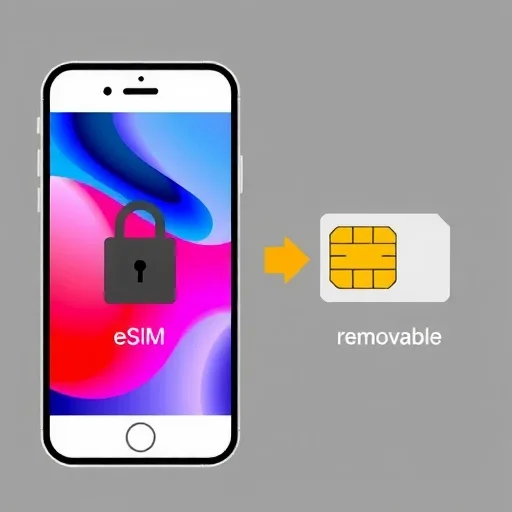
**Security:** eSIMs are generally considered more secure than physical SIMs. A physical SIM can be removed from a lost or stolen phone and inserted into another device, potentially allowing unauthorized access to your number. An eSIM is embedded and cannot be physically removed. If your phone is lost or stolen, the eSIM remains locked with the device. However, a determined attacker could still try to port your number, but that’s a carrier‑level issue, not a SIM vulnerability. For everyday users, eSIM reduces the risk of SIM swapping attacks where someone convinces a carrier to issue a new physical SIM for your number.
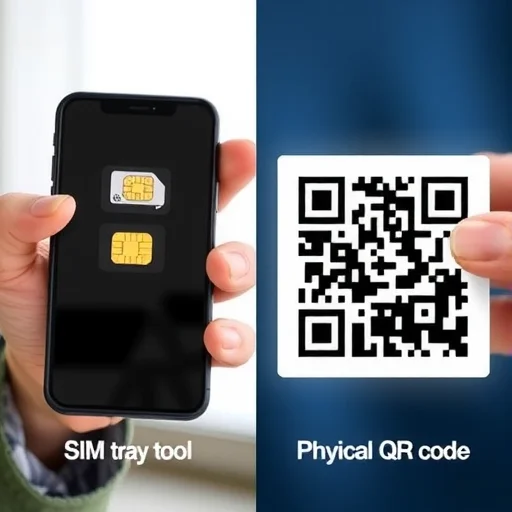
**Installation and Activation:** Physical SIM requires you to have the card in hand. If you’re traveling, that means finding a local shop or ordering in advance. Activation is usually immediate once inserted. eSIM can be purchased and installed from anywhere with an internet connection. For travel, you can buy a local eSIM plan before you even leave home, and it activates when you arrive. No fumbling with SIM trays at the airport. The trade‑off is that some carriers still require a visit to a store or a registration process for eSIM, especially for postpaid plans.
**Device Compatibility:** Physical SIM is universal—every phone with cellular capability has a SIM slot (though some newer phones are eSIM‑only). eSIM is increasingly common but not yet universal. All iPhones from the XS/XR onward support eSIM, and many Android flagships from Google Pixel, Samsung (S20 and newer), and others support it. However, some mid‑range and budget phones still lack eSIM support. Before relying on eSIM, verify that your phone model is compatible.
**Environmental Impact:** Physical SIMs are made of plastic and come in packaging that generates waste. eSIMs are entirely digital, eliminating the need for plastic cards, shipping, and packaging. For the environmentally conscious, eSIM is a greener choice.
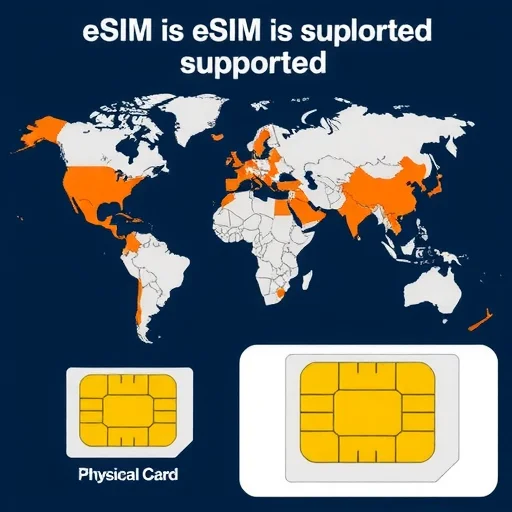
**Carrier Support:** Physical SIM is supported by virtually every carrier in the world. eSIM support is growing rapidly, but it’s not universal. Major carriers in the US, Europe, and many other regions support eSIM, but smaller local carriers in some countries may not. For international travel, global eSIM providers (like Airalo, Nomad, Holafly) fill the gap, offering eSIM plans for most countries even if the local carrier doesn’t directly offer eSIM to tourists.
**When to Choose Physical SIM:** Physical SIM is still the right choice in several scenarios. If you have an older phone that doesn’t support eSIM, you have no choice. If you’re visiting a country where eSIM options are limited or expensive, a local physical SIM might offer better value. Some people also prefer the tangibility of having a physical card they can remove and keep. For users who frequently swap phones or need to move their number between devices quickly, a physical SIM can be easier—though eSIM transfer tools are improving.
**When to Choose eSIM:** eSIM is ideal for frequent travelers who want to add local data plans without swapping SIMs. It’s also great for dual‑SIM users who want to keep personal and work lines separate without carrying two phones. If you value convenience, security, and a clutter‑free experience, eSIM is the way forward. For those buying new phones, eSIM compatibility is a feature worth considering.
I recently helped a friend who travels frequently for work. She used to carry a collection of physical SIM cards for different countries, swapping them in and out of her phone. I introduced her to eSIM. Now she buys a data eSIM before each trip, installs it at home, and keeps her home SIM active for calls. She lands, turns on the eSIM, and has data instantly. She says it’s transformed her travel experience—no more SIM ejector tools, no more losing tiny cards.
Another friend, however, prefers physical SIM. He has an older phone without eSIM support, and he likes being able to buy a prepaid SIM at a local shop when he travels. For him, physical SIM is familiar and works without worrying about compatibility.
Ultimately, the difference between eSIM and physical SIM comes down to digital versus physical, flexibility versus universality. eSIM offers unparalleled convenience for switching carriers, managing multiple lines, and traveling internationally. Physical SIM remains the standard that works with every phone and carrier. As eSIM adoption continues to grow, it’s likely to become the default, but for now, both have their place. Your choice depends on your phone, your travel habits, and whether you value the simplicity of digital management or the tangibility of a physical card. eSIM is a digital SIM embedded in your phone, offering flexibility to add multiple carrier profiles without physical cards. Physical SIMs are removable plastic cards that work on all phones. eSIM excels for travelers, dual‑SIM users, and security; physical SIM remains universally compatible. Choose based on phone support, travel habits, and preference for digital vs. physical management.
DualSIMGuideFINISHED
I still prefer physical SIM because I have an older phone and I like being able to swap SIMs instantly. Also, in some countries, physical SIMs are cheaper than eSIM options. Both have their place.
I switched to eSIM for travel and it’s a game‑changer. No more hunting for SIM cards at the airport. Just buy online, scan a QR code, and you’re connected. Highly recommend for anyone who travels even occasionally.
eSIM’s dual‑SIM capability is amazing. I keep my work line on physical SIM and personal on eSIM. One phone, two numbers, no hassle. Never going back.
Important tip: Some phones that support eSIM still require a physical SIM for certain carriers. Check before you travel! I almost got stuck thinking I could use eSIM for a carrier that didn’t support it. Great guide.
Security is a big plus for eSIM. My physical SIM got stolen once, and someone used it to make calls. With eSIM, that can’t happen. It’s embedded and locked to the phone. Much safer.