
If you’re heading to the United States for a vacation or business trip, staying connected is probably high on your list. You’ll want reliable data for navigating unfamiliar cities, using ride‑hailing apps like Uber and Lyft, and sharing your adventures with friends and family back home. The best solution for most travelers is an eSIM: a digital SIM you can install before you depart. But with the US having a complex mobile landscape—three major carriers, varying coverage between cities and rural areas, and a mix of global and local eSIM options—how do you choose the best one for your travel style? This guide breaks down everything you need to know to pick the right eSIM for your US trip.
The United States has three major mobile network operators: T‑Mobile, AT&T, and Verizon. Each has distinct strengths that matter to travelers. T‑Mobile offers the fastest 5G in major cities and often the most affordable plans, making it ideal for urban travelers. AT&T provides strong coverage across both cities and rural regions, with excellent performance in the Southeast, Midwest, and along major highways. Verizon has the most extensive coverage overall, particularly in rural areas, national parks, and remote regions—essential if you’re road‑tripping through places like Utah’s national parks, the Grand Canyon, or the Montana wilderness. When choosing an eSIM, understanding which network the provider uses is crucial for matching coverage to your itinerary.
eSIM plans for US travelers generally fall into two categories: global eSIM providers and local US carrier eSIMs. Both have their advantages depending on your trip length and travel style.
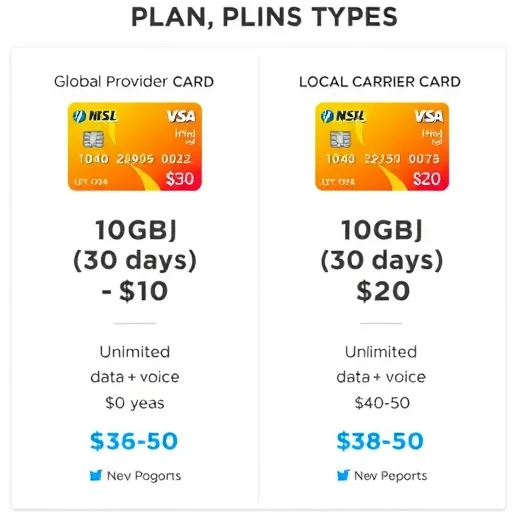
**Global eSIM providers** like Airalo, Nomad, Holafly, and Saily offer plans designed specifically for travelers. These are convenient—you buy and install them before you leave home, and they activate the moment you land. Most of these plans are data‑only and typically operate on T‑Mobile’s network, though some offer AT&T or Verizon options. They’re ideal for short to medium trips (3 to 14 days) and offer fixed‑total data packages (3GB, 5GB, 10GB, etc.) at competitive prices. For a one‑week trip, a 5GB or 10GB plan usually costs between $15 and $30. These providers also have user‑friendly apps that make installation and top‑ups easy.
**Local US carrier eSIMs**—from T‑Mobile, AT&T, or Verizon—are also excellent options. These can be purchased online or at carrier stores upon arrival. They often come with larger data allowances, include a local US phone number, and offer unlimited talk and text. They’re a better value for longer stays (two weeks or more) or if you need a local number for things like restaurant reservations, rental car confirmations, or receiving SMS verification codes. However, they require a bit more setup and may involve registration with your passport.
So which should you choose? Let’s match them to travel styles.
**For short city trips (3 to 7 days)** : If you’re staying in a major city like New York, Los Angeles, Chicago, or San Francisco, a global eSIM provider is your best bet. You can install it before departure, and you’ll have data as soon as you land. A 5GB plan is typically enough for a week if you use maps, ride‑hailing, messaging, and occasional social media. Since these plans usually use T‑Mobile’s network, you’ll have excellent 5G coverage in cities. Providers like Airalo and Nomad are popular choices, and you can top up easily if you need more data.
**For week‑long to two‑week trips with mixed itineraries** : If you’re splitting time between cities and road trips—say, a few days in Los Angeles followed by a drive to the Grand Canyon and Las Vegas—consider a plan with AT&T or a mix of options. Some global providers offer AT&T‑based plans, which give you better rural coverage than T‑Mobile. Alternatively, a local prepaid AT&T eSIM with a moderate data allowance might be a good fit. You’ll have a local number for calls and better coverage on the road.
**For road trips and national parks (2 weeks or more)** : If your trip involves extensive driving through national parks, the Southwest, or rural areas, Verizon is the network you want. Verizon’s prepaid eSIMs offer the widest rural coverage. A typical prepaid plan gives you 15GB or 25GB of data, plus unlimited talk and text, for around $40–$50 for 30 days. This is often comparable to or cheaper than buying multiple global provider plans for longer stays, and the local number is useful for calling hotels, campgrounds, or roadside assistance. You can purchase a Verizon prepaid eSIM online before your trip or at a Verizon store upon arrival.
I recently helped two friends with very different US trips, and their eSIM choices reflected their itineraries.
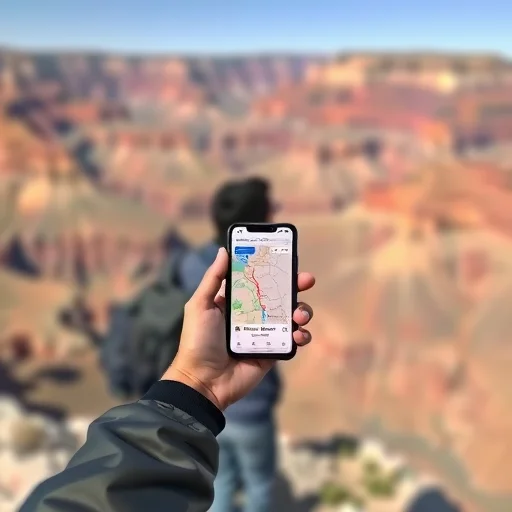
One friend took a 10‑day road trip from Los Angeles to the Grand Canyon, Zion, and Las Vegas. She needed reliable coverage in national parks and a local number to call hotels. We went with a Verizon prepaid eSIM. She purchased it online before her trip, installed it on arrival, and had 15GB of data plus a local number for about $45. She had coverage in places where other travelers on T‑Mobile‑based eSIMs had none, and the local number was essential when she needed to change a hotel reservation on the fly.
Another friend spent a long weekend in New York City. She used a 5GB data‑only eSIM from Airalo, which cost about $15. She installed it before departure, and it worked perfectly for navigating the subway, using Uber, and posting on social media. She didn’t need a local number, so the simplicity of a global provider was perfect.
Now, let’s talk about a few specific providers and what they offer for US travelers.
**Airalo**: Best for short city trips. Its US plans run on T‑Mobile, giving you fast 5G in cities. Data‑only, easy installation via app. Plans from 1GB to 20GB.
**Nomad**: Similar to Airalo, with both fixed‑total and daily‑cap plans. Some plans use AT&T, which is better for mixed urban‑rural travel. Good for travelers who want predictable daily data.
**Holafly**: Specializes in unlimited data. If you’re a heavy user—streaming video, joining video calls, or just want peace of mind—Holafly’s unlimited US plan is appealing. Runs on T‑Mobile; excellent for cities.
**T‑Mobile Tourist Plan**: A local carrier option available at airport kiosks and T‑Mobile stores. Typically offers 15GB or 30GB of data, plus unlimited talk and text, for $30–$40. Great for city travelers who want a local number.
**Verizon Prepaid eSIM**: The best choice for road trips and national parks. Purchase online or at a Verizon store. Plans start around $40 for 15GB with unlimited talk and text. Includes a local number.
**AT&T Prepaid eSIM**: A strong middle ground, with good rural coverage and competitive pricing. Available online or at AT&T stores.
When choosing, consider these practical factors:
**Coverage**: T‑Mobile = cities; AT&T = mixed; Verizon = rural and national parks.
**Local number**: Needed for calls, SMS verification, or restaurant reservations. Global eSIMs are data‑only.
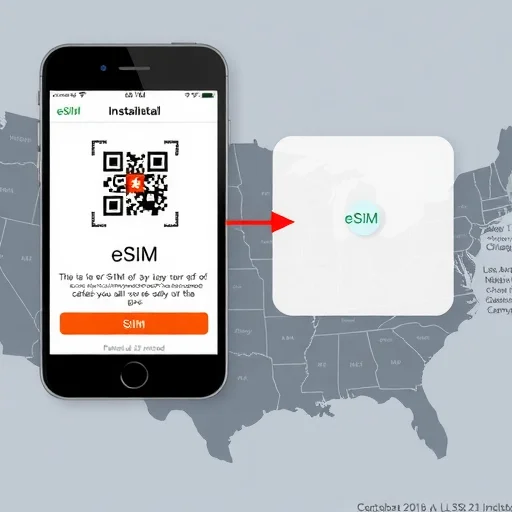
**Setup**: Global eSIMs can be installed before departure. Local eSIMs often require in‑store or online registration with passport.
**Cost**: For short trips, global eSIMs are cost‑effective. For longer trips, local prepaid eSIMs often offer better value per GB and include voice.
Ultimately, the best eSIM for US travel depends entirely on your itinerary. For short city breaks, global eSIM providers offer unmatched convenience. For road trips and national park adventures, investing in a Verizon or AT&T prepaid eSIM with a local number is well worth it. And for longer stays or mixed itineraries, local prepaid plans from T‑Mobile or AT&T strike a good balance. A few minutes of planning before you go means you can land, connect instantly, and focus on enjoying your American journey. For US travel, choose an eSIM based on your itinerary: global providers (Airalo, Nomad) offer convenience for short city trips; local carrier eSIMs (Verizon, AT&T) provide better coverage for road trips and national parks, and include a local number. T‑Mobile is excellent for cities, while Verizon is best for rural and national park coverage.
TravelUSATipsFINISHED
I used Holafly’s unlimited plan for a 10‑day trip. Streamed music on long drives, used video calls, never worried about data. Network was T‑Mobile, so coverage was excellent in cities but spotty in rural areas. Good for urban trips.
I used Airalo for a week in New York City. 5GB was plenty for maps, Uber, and social media. Installed before I left, worked perfectly. Great for short city trips.
The T‑Mobile Tourist Plan is a great deal for city travelers. I got 15GB and unlimited calls for $30. Worked perfectly in San Francisco and LA. Easy to set up at the airport.
Important tip: If you’re road‑tripping in the Western US, Verizon has the best coverage. I had signal in remote areas where friends on T‑Mobile had none. Worth the premium.
Used a Verizon prepaid eSIM for a 2‑week road trip through Utah and Arizona. Had coverage in Zion, Bryce, and the Grand Canyon. The local number was essential for calling hotels. Highly recommend for national parks.