
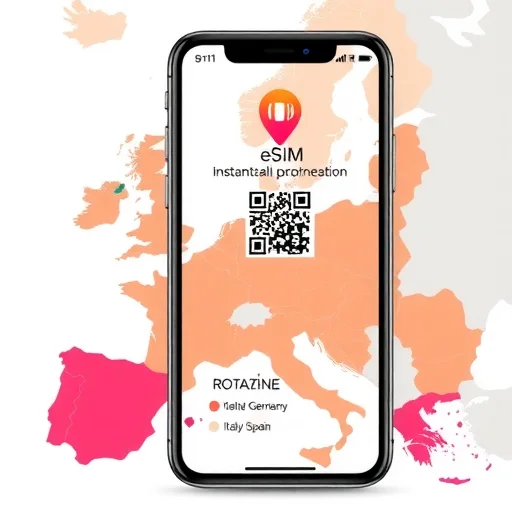
If you’re planning a trip to Europe—whether it’s a week in Paris, a month backpacking through Italy, or a business trip spanning several countries—staying connected across borders is essential. The best solution for most travelers is a digital SIM (eSIM) that works seamlessly across the European Union. Thanks to the EU’s “roam like at home” rules, a single digital SIM bought in one EU country gives you data, calls, and texts across the entire EU without extra roaming fees. This guide explains how digital SIMs work in Europe, the different options available, and how to choose the best one for your trip.
First, let’s understand why Europe is uniquely suited for digital SIMs. The European Union has a regulation called “roam like at home,” which means that any SIM card from an EU country can be used in any other EU country without additional roaming charges. If you buy a digital SIM from a French, German, or Italian carrier, you can use that same plan in Spain, the Netherlands, or any other EU member state at no extra cost. This makes a single European digital SIM far more convenient than buying separate SIMs for each country you visit.
There are two main types of digital SIMs for Europe: European carrier eSIMs and global travel eSIMs.
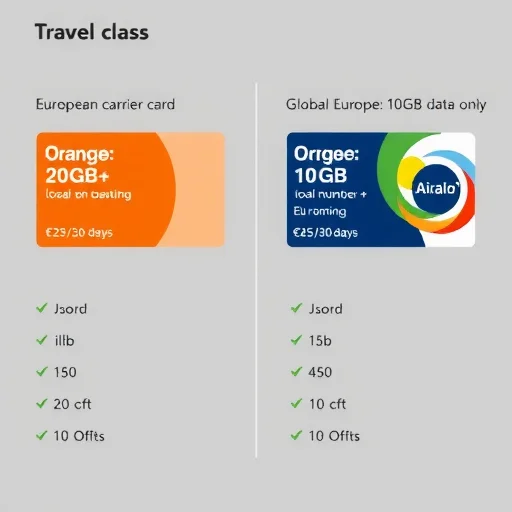
**European carrier eSIMs** are offered by local operators like Orange (France), Vodafone (Germany), TIM (Italy), or Three (Ireland). These are full‑service eSIMs that give you a local European phone number, voice, SMS, and data. They are ideal for longer stays (two weeks or more) or if you need a local number for business, reservations, or local services that require SMS verification. You can purchase them online before you travel or at carrier stores upon arrival. Because of “roam like at home,” these eSIMs work across the entire EU.
**Global travel eSIMs** are offered by providers like Airalo, Nomad, Holafly, and Ubigi. These are designed specifically for travelers. They are typically data‑only (though some now offer voice options) and you can buy regional “Europe” plans that cover multiple countries. You install them before you travel, and they activate when you land. They are convenient for short trips and for travelers who only need data for maps, messaging, and social media. They do not provide a local phone number.
So which should you choose? Let’s match them to travel styles.
If you’re taking a short trip (3 to 10 days) and only need data for maps, messaging, and social media, a global travel eSIM with a Europe regional plan is your best bet. You can buy it before you leave, install it at home, and have data the moment you land. Plans typically range from 3GB to 20GB, with prices from $10 to $40. Providers like Airalo, Nomad, and Holafly have user‑friendly apps and good coverage using partner networks like Orange, Vodafone, or Deutsche Telekom.
If you’re staying longer (two weeks or more), or if you need a local phone number for calls, SMS verification, or using local apps, a European carrier eSIM is a better choice. For example, Orange’s “Holiday” eSIM offers 20GB of data, unlimited calls within Europe, and a French phone number for around €25 for 30 days. Vodafone Germany and TIM Italy offer similar prepaid eSIMs. These can often be purchased online before travel (with passport verification) or at carrier shops upon arrival. The “roam like at home” feature means your plan works across all EU countries.
Now, let’s look at specific options.
**Orange Holiday eSIM** (France) is one of the most popular European travel eSIMs. It offers 20GB of data, unlimited calls and texts within Europe, and a French phone number. It’s valid for 30 days and costs around €25–€30. You can buy it online, receive a QR code, and install it before you leave. It works across the EU and includes Switzerland, UK, and other non‑EU countries with some limits. It’s ideal for travelers who want a local number and generous data.
**Airalo Europe eSIM** is a data‑only option with regional plans covering 30+ European countries. You can choose from 3GB to 20GB plans valid for 15 to 30 days. Prices range from $10 to $40. It uses local partner networks like Orange, T‑Mobile, and Vodafone. Installation is via app or QR code. It’s perfect for short trips where you only need data.
**Nomad Europe eSIM** offers both fixed‑total and daily‑cap plans for Europe. A 10GB plan might cost around $20 for 30 days. It’s data‑only and uses reliable partner networks. Nomad’s app is easy to use, and you can top up if needed.
**Holafly Europe eSIM** specializes in unlimited data plans. If you’re a heavy user—streaming, video calls, tethering—Holafly’s unlimited Europe plan gives you peace of mind. It’s data‑only, typically costs around $40–$60 for 30 days, and uses partner networks like Orange and Vodafone.
**Ubigi Europe eSIM** offers both fixed‑total and unlimited plans, with a focus on high‑quality networks. Its 10GB plan for 30 days is competitively priced around $20. Ubigi is known for reliable connectivity across Europe.
If you’re visiting the UK, Switzerland, or other non‑EU European countries, check roaming coverage carefully. Some European carrier eSIMs include these countries with additional charges; others do not. Global travel eSIMs often include them in “Europe” plans, but it’s worth verifying.
Let’s walk through a few scenarios.
A friend of mine traveled to France, Italy, and Spain for 10 days. She only needed data for maps, WhatsApp, and social media. She bought a 10GB Airalo Europe eSIM for $20. She installed it at home, and it worked seamlessly across all three countries. She kept her home SIM for calls and texts, using the eSIM for data. She was very happy with the simplicity.
Another friend spent a month in Germany for work. She needed a local German number for business calls and to use local services. She bought a Vodafone Germany prepaid eSIM online before her trip. She got 20GB of data, unlimited German calls, and a German number for €25. She installed it at home, and it activated when she landed. She used it across Germany, and when she traveled to the Netherlands for a weekend, the “roam like at home” feature worked perfectly.
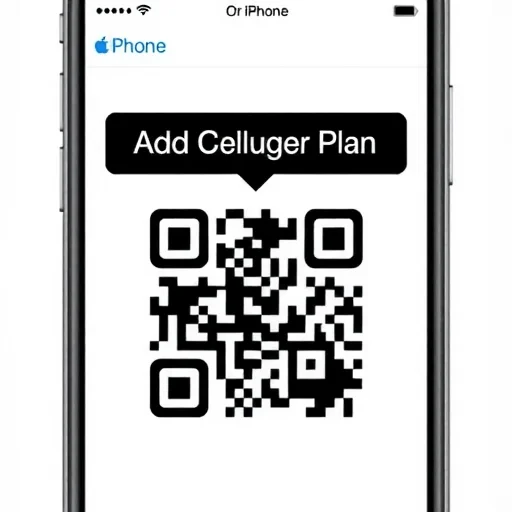
Installation for both types is the same: you scan a QR code in your phone’s cellular settings. On iPhone: Settings > Cellular > Add Cellular Plan. On Android: Settings > Connections > SIM Manager > Add eSIM. Once installed, you can label the plan and set it as your default for data.
One important note: some European carrier eSIMs require identity verification (passport upload) when purchasing online. This is normal and usually takes a few minutes to a few hours. Global travel eSIMs generally do not require verification.
What about compatibility? Most modern smartphones support eSIM: iPhones from XS/XR onward, Google Pixels 3 and newer, Samsung Galaxy S20 and newer, and many others.
Ultimately, a digital SIM is the most convenient way to stay connected across Europe. Whether you choose a European carrier eSIM with a local number and voice, or a global travel eSIM with simple data‑only plans, you’ll enjoy seamless connectivity without the hassle of physical SIM cards. For European travel, a digital SIM (eSIM) offers seamless connectivity across the EU with “roam like at home.” Choose a European carrier eSIM (Orange, Vodafone) for a local number and voice; choose a global travel eSIM (Airalo, Nomad, Holafly) for data‑only convenience. Install before travel via QR code. Multi‑country plans available.
EuropeESIMFINISHED
Used an Airalo Europe eSIM for 2 weeks across France, Italy, and Switzerland. 10GB was plenty for maps, social media, and WhatsApp calls. Installed before I left, worked perfectly everywhere. Highly recommend.
Important tip: Check if your destination includes non‑EU countries like Switzerland or UK. Some Europe eSIMs cover them, some charge extra. I used Holafly’s Europe plan and it covered Switzerland with no issue.
I needed a local number for business in Germany, so I got a Vodafone prepaid eSIM online. 20GB, unlimited calls, German number for €25. Worked across Germany and in Austria too. Great value and seamless.
European carrier eSIMs often require passport verification. I bought an Orange Holiday eSIM online, uploaded my passport, and got the QR code in about 2 hours. Do it a few days before your trip to be safe.
eSIM is so convenient for multi‑country travel. No more swapping SIMs at each border. Just land and go. I’m never going back to physical SIMs for Europe trips.