
You’re planning a trip that spans three countries, maybe even four. You know you’ll need data for maps, translations, and staying in touch, but the thought of buying a new SIM at every border feels exhausting. The good news is that you don’t have to. Worldwide data SIMs and global eSIMs have evolved significantly in recent years, and there’s now a straightforward solution for multi-country travelers. The core answer depends on your travel style: if you’re visiting multiple countries on one trip, a regional or global eSIM is usually your best bet; if you’re a frequent international traveler, a long-term global SIM plan might make more sense; and if you’re traveling with a group or need unlimited data, a portable global Wi-Fi hotspot could be the answer. By the end of this guide, you’ll know exactly which option fits your itinerary and how to avoid the common pitfalls that leave travelers stranded without service.
First, let’s understand the landscape of worldwide data connectivity. There are three main categories of products marketed as “worldwide” data solutions. The first is a global eSIM, which is entirely digital and can be purchased from providers like Airalo, Holafly, Nomad, or Ubigi. These eSIMs offer data packages that work across dozens or even hundreds of countries, often using a single plan that automatically connects to local partner networks as you cross borders. The second category is a physical global SIM card, typically sold by companies like OneSimCard, WorldSIM, or KnowRoaming. These are physical SIMs that you insert into your phone and that work in multiple countries, often with a single rate or regional pricing tiers. The third category is a global portable Wi-Fi hotspot, which is a physical device you rent that creates a personal Wi-Fi network for your devices and works across multiple countries.
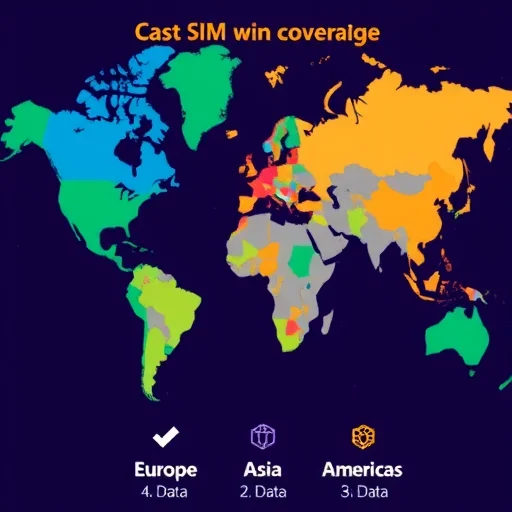
So which one should you choose? Let’s start with global eSIMs, which have become the go-to choice for most modern travelers. If your phone supports eSIM—and most recent iPhones, Google Pixels, and high-end Samsung devices do—this is almost always the most convenient option. You can purchase a global eSIM plan entirely online before you leave home. You buy a data package, receive a QR code or install it through an app, and add it to your phone. The beauty of a global eSIM is that it often works seamlessly across borders. For example, a “Europe” eSIM might cover 30+ countries, and when you fly from France to Italy, the eSIM automatically connects to a local partner network without any action on your part. Some providers offer truly global plans that cover 100+ countries across multiple continents. The main trade-off is that most global eSIMs are data-only—they don’t include a traditional phone number for calls and SMS. For most travelers, this is fine because apps like WhatsApp, FaceTime, and Google Maps work perfectly over data. However, if you need to make traditional phone calls or receive verification texts from banks, you’ll want a plan that includes voice services or supplement your eSIM with a VoIP app like Skype.
Global physical SIM cards are a solid alternative, especially if you have an older phone that doesn’t support eSIM or if you prefer having a physical SIM you can swap in and out. Companies like OneSimCard and WorldSIM have been in this space for years and offer SIMs that work in 200+ countries. These SIMs often come with a real phone number (sometimes from a country like Estonia or the UK) that allows you to receive calls and texts globally. Some offer “pay as you go” rates, where you pay only for what you use, while others offer regional or global data packages. The advantage is that you get a consistent SIM that works wherever you go, and you can top it up online. The downside is that rates can be higher than local SIMs, and data speeds may not be as fast as what you’d get from a local carrier in each country. Also, you need to order the physical SIM before your trip and have it shipped to you.
The third option is a global portable Wi-Fi hotspot. This is a small device that creates a personal Wi-Fi network you can connect multiple devices to—phones, tablets, laptops. Providers like TravelWiFi, Tep Wireless, and Hippocket Wi-Fi rent these devices for a daily fee, often with unlimited data in multiple countries. You pick up the device at your departure airport, have it delivered to your hotel, or receive it by mail before you leave. The advantages are strong: you can connect up to 5 to 10 devices simultaneously, battery life is typically a full day, and you often get truly unlimited data without worrying about throttling. For families, groups, or business travelers who need to keep multiple devices online, this can be more cost-effective than buying individual SIMs. The drawbacks are that you have to carry an extra device, keep it charged, and return it after your trip. Also, if you split up from your travel companions, only the person carrying the hotspot stays connected.
Now, let’s get into the practical steps for choosing and using a worldwide data solution. First, audit your trip. How many countries will you visit? Are they within the same region (like Europe) or spread across multiple continents? How long will you be traveling? How many devices need connectivity? Will you need to make phone calls or just use data? Answering these questions will immediately narrow your options. If you’re visiting multiple countries in the same region, a regional eSIM is often the most cost-effective. If you’re crossing continents, a true global eSIM or a global hotspot might make more sense. If you’re traveling for more than a month, the economics shift—a long-term global SIM with a pay-as-you-go model or buying local SIMs in each country might become cheaper.
Second, check your device compatibility. For eSIM, confirm that your phone supports it and is unlocked. You can usually check this in your phone’s settings: on iPhone, go to Settings > General > About, and look for “Carrier Lock” or “Network Provider Lock”—it should say “No SIM restrictions.” For Android, the path varies but is usually in Settings > Connections > SIM Card Manager or About Phone. If your phone is locked, contact your carrier to request an unlock before you travel. For physical global SIMs, any unlocked phone that works with GSM networks (which is most of the world outside the US) will work.
Third, consider data speeds and network quality. Not all global SIMs and eSIMs are created equal. Some use premium local partners and offer 4G/LTE or even 5G speeds in major cities. Others route data through a central server, which can introduce latency and slower speeds. Read reviews specifically about the countries you’re visiting. For example, a global eSIM that works great in Western Europe might have slower speeds in Southeast Asia depending on which local networks it uses. Providers like Airalo and Ubigi often allow you to purchase country-specific or regional eSIMs in addition to global ones, which can give you better speeds and local pricing.
Let me share a real example. Sarah, a freelance travel writer from Australia, was embarking on a six-week trip that covered Japan, Thailand, Italy, and the UK. She needed reliable data for research, uploading content, and staying in touch with editors, but she didn’t need a local phone number. She had an iPhone 15, which supports eSIM, so she purchased a global eSIM from a provider that offered coverage in all four countries. She bought a 20GB global package that worked across 100+ countries for around $50. Before leaving, she installed the eSIM and set it as her secondary line. When she landed in Tokyo, the eSIM connected automatically. When she flew to Bangkok, it reconnected to a Thai network without any intervention. The same happened in Italy and the UK. She never had to hunt for a local SIM shop, never worried about running out of data in a new country, and could monitor her usage through a single app. Her total connectivity cost for six weeks was less than she would have paid for local SIMs in each country, and the convenience was unmatched.

For a different scenario, consider a family of four traveling to Europe for three weeks. They visited France, Switzerland, and Italy, and they had two teenagers with their own phones plus parents needing to check work emails. For them, a global portable Wi-Fi hotspot was the best fit. They rented a device that offered unlimited data across 50+ European countries for about $8 per day. The device could connect all four phones plus a laptop simultaneously, and the battery lasted a full day of sightseeing. The family paid one flat fee instead of four separate eSIMs or SIM cards, and they appreciated having a single device to manage. The only thing they noted was that they had to keep the hotspot charged and remember to return it at the end of the trip, but the convenience of always having a strong Wi-Fi signal for everyone made it worthwhile.
One important factor to consider when using worldwide data solutions is fair usage policies. Many global eSIMs and hotspots advertise “unlimited” data, but this often comes with a soft cap. After a certain amount of data—usually 10GB to 20GB over a set period—speeds may be reduced significantly. If you’re a heavy user who streams video or uses your phone as a hotspot for work, read the fine print. Some providers offer truly unlimited data at full speed, but these are typically more expensive. For most travelers, a package with 10GB to 20GB of high-speed data is sufficient for a two- to three-week trip covering maps, social media, messaging, and occasional video calls.
A final tip for frequent travelers: consider whether a long-term global SIM or eSIM subscription makes sense. Some providers now offer annual plans that give you a certain amount of high-speed data each month across multiple countries. If you travel internationally several times a year, this can be more cost-effective than buying new packages for each trip. Providers like KnowRoaming and OneSimCard offer plans that never expire as long as you maintain a small balance, making them ideal for travelers who take multiple shorter trips.
Navigating worldwide data connectivity doesn’t have to be complicated. The days of buying a new SIM card at every border are fading, replaced by seamless eSIMs and global hotspot rentals that let you focus on your trip instead of your phone. Start by understanding your trip—how many countries, how many devices, and whether you need voice services. Then choose the option that aligns: a global eSIM for solo travelers and modern phones, a physical global SIM for older devices or those needing voice services, or a portable Wi-Fi hotspot for groups and families. With the right solution in place, you can stay connected from Tokyo to Paris to Cape Town without ever hunting for a SIM card again. The best worldwide data solution depends on your trip type. Global eSIMs offer seamless digital convenience for solo travelers with unlocked modern phones across multiple countries. Physical global SIMs suit older devices or those needing voice services. Portable Wi-Fi hotspots are ideal for groups or families needing multiple device connections. Choose based on your destinations, devices, and whether you need voice capabilities.
Global eSIM saved my six-week backpacking trip across Southeast Asia. I bought a 20GB regional plan that covered Thailand, Vietnam, Cambodia, and Malaysia. Never had to find a SIM shop in a new country, and the speeds were great everywhere except some remote islands. Will never travel without it.
Heads-up for anyone considering a global eSIM: check which local networks they use. I had one that worked great in cities but had slow speeds in rural areas. Read reviews for the specific countries you’re visiting, especially if you’re going off the beaten path.
I’m old school and still prefer a physical SIM. Got a OneSimCard before my trip to Europe and it worked in every country without issue. The rates were a bit higher than buying local SIMs, but the convenience of not having to figure out a new SIM in each country was worth it.
I travel for work internationally about six times a year. Switched to an annual global eSIM plan and it’s been fantastic. I pay one flat fee per year, get 10GB per month across 100+ countries, and never have to think about connectivity before a trip. Huge time saver.