
If you’re planning a trip to the United States—whether it’s exploring the canyons of the Southwest, navigating the streets of New York, or road‑tripping along the California coast—staying connected is essential. You’ll want reliable data for maps, ride‑hailing apps like Uber and Lyft, and staying in touch with friends and family. The best solution for most travelers is an eSIM: a digital SIM you can install before you depart. But with the US having a complex mobile landscape—multiple carriers, varying coverage between cities and rural areas, and a mix of prepaid and postpaid options—how do you choose the best eSIM plan? This guide walks you through exactly what to look for so you can stay connected without overpaying.
The United States has three major mobile network operators: AT&T, T-Mobile, and Verizon. Each has its strengths. Verizon has the most extensive overall coverage, particularly in rural areas and along interstate highways. T-Mobile offers excellent urban coverage and fast 5G in major cities, with a strong focus on value. AT&T sits somewhere in between, with solid coverage across both cities and rural regions. When choosing an eSIM plan, you’re often choosing which underlying network you’ll be using. For travelers who plan to stick to major cities, T-Mobile is usually sufficient. For those venturing into national parks, rural areas, or road‑tripping across multiple states, Verizon or AT&T are better bets.
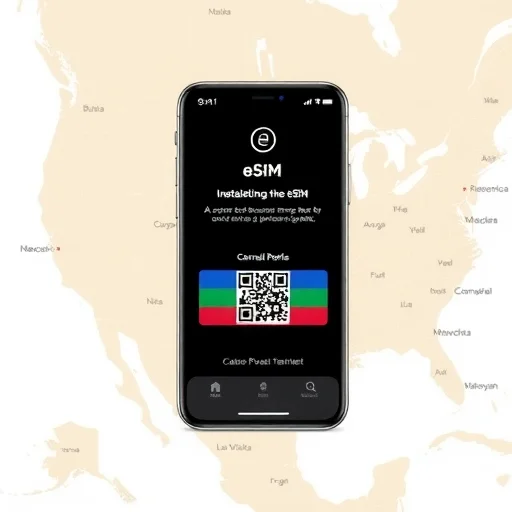
eSIM plans for the US generally fall into three categories. The first is global eSIM providers like Airalo, Nomad, Holafly, and Saily. These offer plans designed specifically for travelers. They’re convenient—you buy and install them before you leave home, and they activate the moment you land. Most of these plans are data‑only and operate on either T‑Mobile or AT&T networks. They’re ideal for short trips (3 to 14 days) and offer fixed‑total data packages (3GB, 5GB, 10GB, etc.) at competitive prices. For a one‑week trip, a 5GB or 10GB plan usually costs between $15 and $30, depending on the provider.
The second category is local US prepaid eSIMs from the carriers themselves. T‑Mobile, AT&T, and Verizon all offer prepaid eSIM plans that you can purchase online or at their stores after arrival. These often come with larger data allowances, include a local US phone number, and sometimes offer unlimited talk and text. They’re a better value for longer stays (two weeks or more) or if you need voice calling and SMS verification for services like Uber or local restaurant reservations. However, they require a bit more setup—you’ll need to provide ID, and some plans auto‑renew monthly, so be mindful of cancellation.
The third category is travel‑focused US eSIM providers that partner with US carriers but offer plans tailored to tourists. Services like Keepgo, Ubigi, and others fall into this category. They often provide a middle ground: easier setup than local carrier plans, with better per‑GB rates than global providers for medium‑length trips.
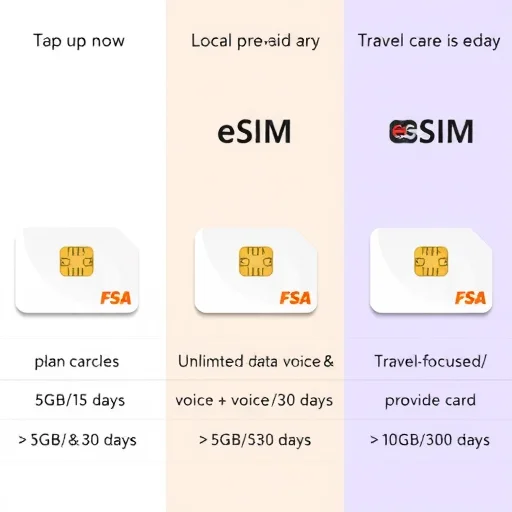
So which one should you choose? Let’s break it down by trip length and needs. For short trips (3 to 7 days), a global eSIM provider like Airalo or Nomad is usually the most convenient. You can install it before departure, and you’ll have data as soon as you land. A 5GB plan is typically enough for a week if you use maps, ride‑hailing, messaging, and occasional social media. For week‑long to two‑week trips, 10GB gives you comfortable breathing room. For trips longer than two weeks, or if you need a local US phone number for calls and texts, a local prepaid eSIM from T‑Mobile or AT&T becomes more cost‑effective. T‑Mobile’s “Tourist Plan” (often available at airports) and AT&T’s prepaid options give you unlimited talk, text, and a generous data allowance for a flat monthly fee—usually $30 to $50, which can be better value than buying multiple smaller data packages from global providers.
Now, let’s talk about coverage specifics. If your trip is focused entirely on a major city—New York, Los Angeles, Chicago, San Francisco—T‑Mobile’s network (used by many global eSIM providers) will serve you perfectly. If you’re road‑tripping through national parks—think Yellowstone, Grand Canyon, Zion—or driving through rural areas, Verizon’s network has the edge. Some global eSIM providers allow you to choose between networks. If coverage is critical for your itinerary, it’s worth spending a few extra dollars for a plan that uses Verizon or AT&T. Alternatively, a local prepaid Verizon eSIM can give you the widest rural coverage.
Another important detail: US carriers use different 5G and LTE bands. Most modern smartphones will work across all three networks, but if you have an older phone, compatibility can vary. Global eSIM providers usually offer a network check tool. For local carrier eSIMs, you can check compatibility on their websites. If you’re arriving from outside the US, make sure your phone is unlocked—a locked phone won’t accept any eSIM except from its home carrier.
Let’s walk through a couple of scenarios. Suppose you’re coming from Europe for a 10‑day trip that includes New York City, a few days in Washington D.C., and a quick stop in Philadelphia. You’ll be staying in hotels with Wi‑Fi, using Uber, and posting on social media. A 10GB global eSIM plan from a provider like Airalo or Nomad, priced around $20 to $25, is a perfect fit. You install it before you leave, and you’re connected upon arrival without any hassle.
Now imagine you’re on a three‑week road trip from Los Angeles to the Grand Canyon, Las Vegas, and through Utah’s national parks. You’ll be driving long stretches, using navigation constantly, and staying in motels where Wi‑Fi may be unreliable. You also want to be able to make phone calls to hotels and tour operators. In this case, a local prepaid eSIM from Verizon or AT&T with unlimited data and voice for $40 to $50 is a better choice. The peace of mind of having coverage in remote areas and the ability to make traditional phone calls outweighs the slightly higher upfront cost.
I recently helped a friend plan a two‑week US trip that combined city time in San Francisco with a road trip down the Pacific Coast Highway to Los Angeles and then to Las Vegas. We opted for a global eSIM for the first week in the city—easy and cheap—and then switched to a local Verizon prepaid eSIM for the road trip portion to ensure coverage along the coastal highway and through the desert. The flexibility of using eSIMs allowed her to mix and match plans based on her itinerary. She told me later that having Verizon coverage in remote stretches of California was a huge relief.
If you’re a business traveler or someone who needs to maintain a US number for recurring trips, you might consider a longer‑term prepaid eSIM plan from a provider like T‑Mobile or AT&T that allows you to keep the same number across trips. Many of these plans can be paused or renewed online.
Ultimately, the best eSIM plan for the US is the one that matches your itinerary length, coverage needs, and whether you require voice capabilities. For short city trips, global eSIM providers offer unbeatable convenience. For extended road trips or rural exploration, investing in a local prepaid eSIM from a carrier with wide rural coverage is well worth it. And for those in between, travel‑focused US eSIM providers offer a solid middle ground. A few minutes of planning before you go means you can land, connect instantly, and focus on enjoying your trip. For US travel, choose an eSIM based on trip length and itinerary: global providers (Airalyo, Nomad) offer convenience for short city trips; local carrier prepaid eSIMs (Verizon, AT&T, T‑Mobile) provide better value for longer stays or rural coverage, often including a local number for calls.
Just did a 10-day trip to NYC and DC. Used a 10GB Airalo plan. Worked perfectly—5G in cities, easy setup before I left. Highly recommend for short city trips.
I needed a US number for business calls during a 3-week trip. Got the T‑Mobile tourist eSIM at LAX. Unlimited talk and text plus 15GB data for around $40. Easy to set up and great value for longer stays.
Road-tripped from Denver to Moab and Zion. Used a local Verizon prepaid eSIM. Had coverage in places where my friends with T‑Mobile had nothing. If you’re going to national parks, spend the extra for Verizon or AT&T. Worth every penny.
Used a Nomad eSIM for a week in Chicago. 5GB was plenty for maps, Uber, and Instagram. The app made it super easy to top up when I ran low. Solid option for city travelers.
Important tip: Make sure your phone is unlocked! My friend’s phone was carrier-locked and couldn’t use any eSIM. We had to share my hotspot the whole trip. Check before you go.