
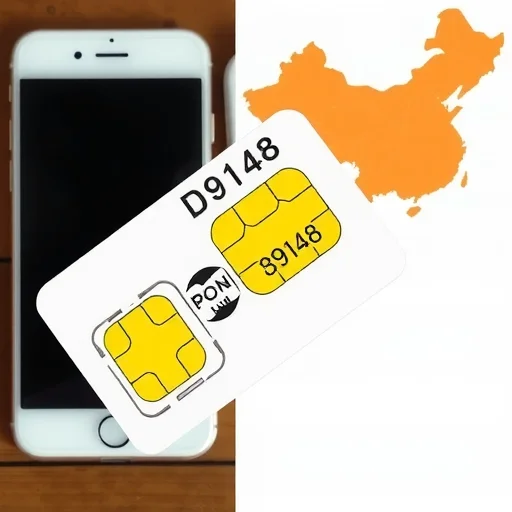
If you’ve come across the term “89148 SIM card carrier” while shopping for a SIM card or eSIM, you might be wondering what it means. The number 89148 refers to a specific Mobile Country Code (MCC) and Mobile Network Code (MNC) combination—in this case, 891 is the MCC for China, and 48 is the MNC for China Mobile, one of the world’s largest mobile network operators. So, an 89148 SIM card is essentially a SIM card issued by China Mobile. This guide explains what that means for travelers, how it works, and whether such a SIM is a good option for your connectivity needs.
First, let’s decode the numbers. Every SIM card has an Integrated Circuit Card Identifier (ICCID) that includes a Mobile Country Code (MCC) and Mobile Network Code (MNC). The first three digits (891) indicate the country—China. The next two or three digits (48) indicate the specific carrier—China Mobile. So an ICCID starting with 89148 tells you that the SIM was issued by China Mobile. This code is printed on the physical SIM card and is also embedded in the data of an eSIM profile.
So, what does this mean for you as a traveler? If you’re traveling to China, a SIM card with the 89148 code (China Mobile) is one of the best options for reliable coverage. China Mobile has the most extensive network in China, covering even remote rural areas, high‑speed trains, and subway systems. If you’re traveling to other countries, you might encounter an 89148 SIM as a roaming SIM—some global travel SIMs are actually China Mobile SIMs that roam on partner networks abroad. In that case, your data traffic may route through China, which can cause higher latency (slower response times) and may block certain services due to China’s internet restrictions.
Now, let’s talk about using an 89148 SIM card in China. If you’re a traveler visiting China, getting a local China Mobile SIM (with the 89148 prefix) is an excellent choice. China Mobile offers prepaid SIM cards for tourists at airports and carrier shops. These SIMs provide a local Chinese phone number, generous data allowances, and access to China Mobile’s extensive 4G and 5G network. You’ll need to register with your passport, which is required by Chinese law. Once activated, you’ll have reliable connectivity across the country, including in remote areas like Tibet, Xinjiang, and the countryside.
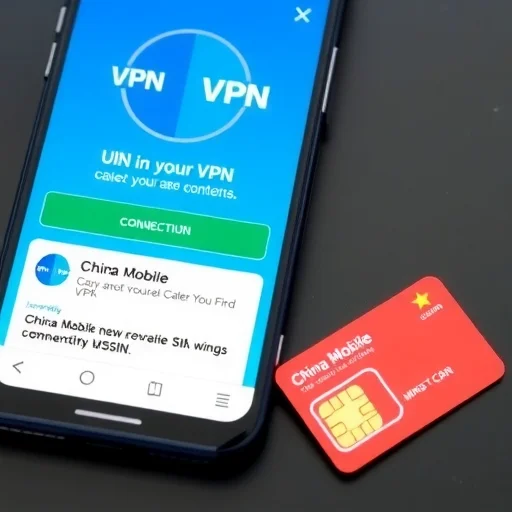
However, there are important considerations. China’s internet has restrictions—websites like Google, Facebook, Instagram, and WhatsApp are blocked. A local China Mobile SIM will not bypass these restrictions; you’ll need a VPN (Virtual Private Network) to access blocked services. Additionally, if you’re using a China Mobile SIM for roaming outside China, be aware that your traffic may still be routed through China, meaning you’ll experience the same restrictions and higher latency.
If you’re a traveler outside China, you might encounter an 89148 SIM card sold as a “global travel SIM.” Some companies resell China Mobile roaming SIMs under their own brand. These SIMs often offer competitive rates for data in multiple countries, but because they roam on partner networks, the experience can vary. The key downside is that all your internet traffic is routed through China, which can lead to slower speeds (due to higher latency) and blocked access to services like Google, YouTube, and WhatsApp unless you use a VPN. For travelers who need access to these services, a local SIM in your destination or a global eSIM from a provider that doesn’t route traffic through China is often a better choice.
Now, let’s compare the 89148 SIM to alternatives. If you’re traveling to China, a local China Mobile SIM (89148) is excellent. But if you’re traveling elsewhere, you might prefer:
**Local SIM in your destination**: Gives you a local number, fast speeds, and no restrictions.
**Global eSIM from providers like Airalo, Nomad, or Holafly**: These eSIMs partner with local carriers in each country, so your traffic is routed locally, not through a single country. They’re convenient, support 5G in many places, and don’t have the restriction issues of a roaming SIM that routes through China.
If you’re already in possession of an 89148 SIM (perhaps from a previous trip or as a global travel SIM), how do you use it effectively? For travel to China, it’s perfect. For travel elsewhere, you can still use it, but be prepared for potential speed and restriction issues. If you need access to Google services, ensure you have a reliable VPN installed before you travel—once you’re on a SIM that routes through China, you won’t be able to download a VPN from app stores without one.
Let’s look at a few real‑world examples.
A friend of mine traveled to Beijing and Shanghai for two weeks. She bought a China Mobile prepaid SIM at the airport. The 89148 SIM gave her 20GB of data for 30 days at a reasonable price. She used a VPN to access Google Maps, WhatsApp, and Instagram. Coverage was excellent everywhere—on the subway, in the city, and even on the Great Wall. She was happy with the reliability.
Another friend bought a “global travel SIM” online that turned out to be a China Mobile roaming SIM (89148). He used it in Europe. While the data worked, he noticed that Google Maps was slow to load, and some apps didn’t work correctly because the traffic was routed through China. He switched to a local European eSIM for the rest of his trip and had a much better experience.
In summary, an 89148 SIM card carrier is China Mobile. If you’re traveling to China, it’s an excellent choice for reliable, widespread coverage. If you’re traveling elsewhere and encounter an 89148 SIM as a “global” product, be aware that your internet traffic may be routed through China, leading to potential speed and access restrictions. For most international travel outside China, a local SIM or a global eSIM that partners with local carriers is a better fit. Understanding the MCC/MNC code can help you make an informed choice. An 89148 SIM card carrier is China Mobile (MCC 891, MNC 48). It’s an excellent choice for travel to China, offering extensive coverage. For travel elsewhere, be aware that 89148 SIMs sold as “global” may route traffic through China, causing higher latency and access restrictions. For most international travel, a local SIM or global eSIM that partners with local carriers is a better alternative.
SIMCardCarrierGuideFINISHED

I didn’t know what 89148 meant until now. I had a SIM with that code and wondered why some apps were blocked. This explains it. Thanks for the clear info.
I used a China Mobile SIM (89148) on a trip to China. Coverage was perfect everywhere—Beijing, Xi’an, and rural areas. With a VPN, I could access Google Maps and WhatsApp. Highly recommend for travel to China.
I used a China Mobile roaming SIM in the US. It worked, but latency was high. Fine for messaging, but video calls were laggy. If you need fast, unrestricted internet, go with a local SIM or eSIM.
For travel to China, getting a local China Mobile SIM at the airport is the way to go. Cheap, reliable, and you get a local number. Just remember to install a VPN before you go.
Important tip: If you buy a “global” SIM and it has an 89148 ICCID, your traffic routes through China. I learned this the hard way in Europe—slow speeds and blocked services. Switched to a local eSIM and it was much better. Check the ICCID before buying!